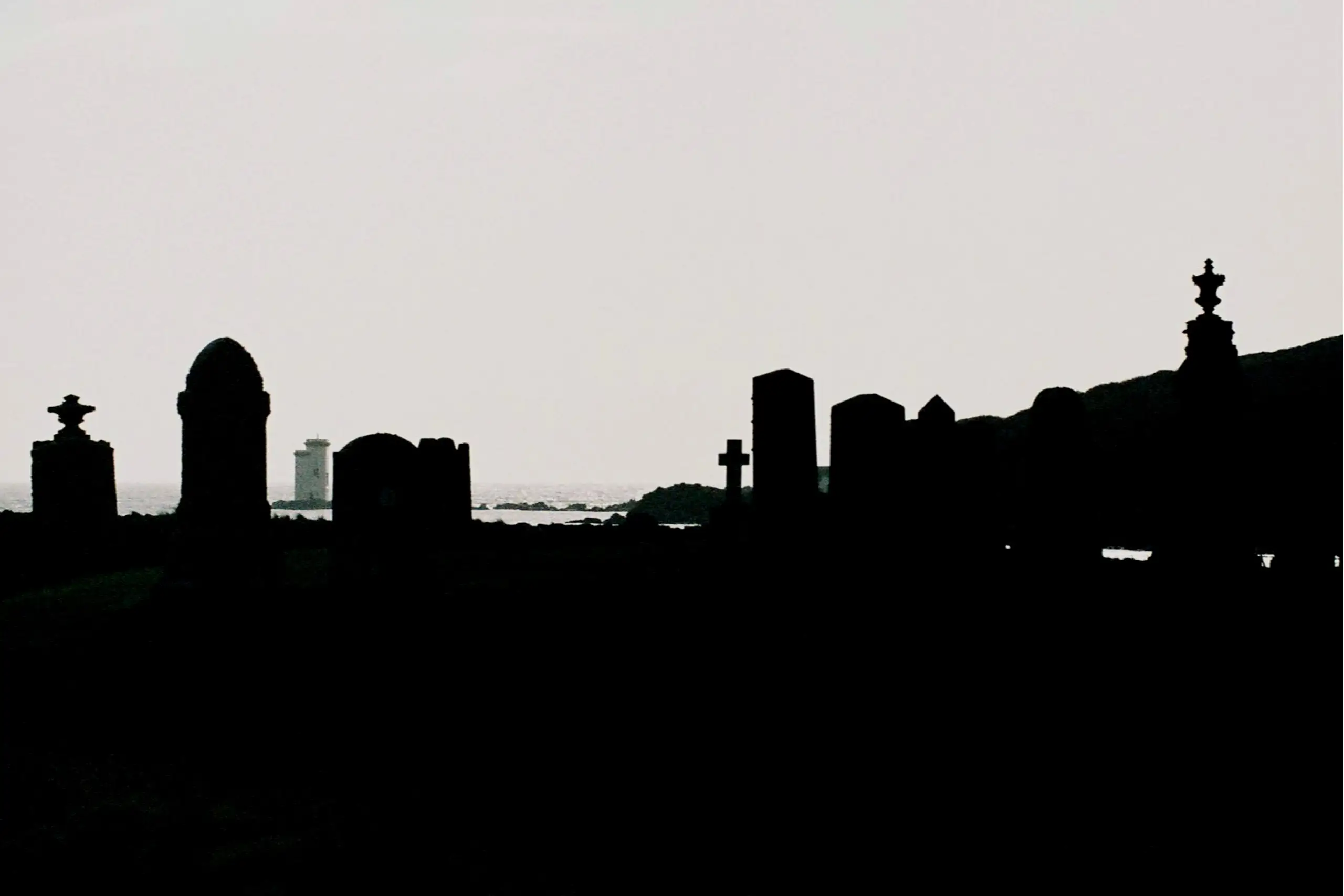
It can be more comfortable than Port Ellen to anchor across in Kilnaughton Bay, protected as it is from westerly winds. It has been a bit spoiled by some modern cottages, but the beach is very pleasant to wander along, and the sand is just right for sandcastles. The Carraig Fhadda lighthouse was built in 1832 — square and stumpy, very much not in the Stevenson style. If you walk on just past the lighthouse you come to the so-called singing sands, said to be a delightful beach — Tràigh Bhan.
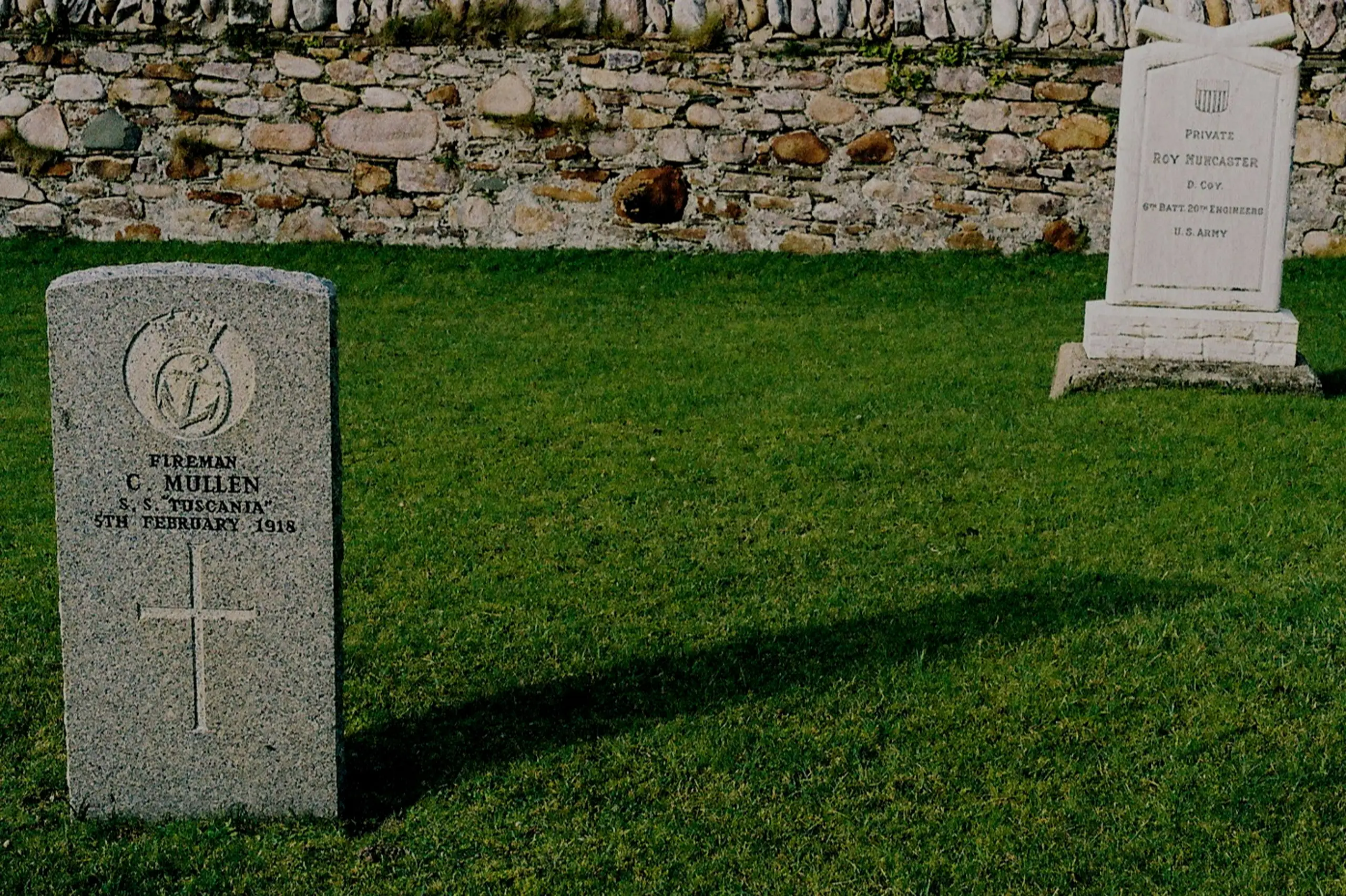
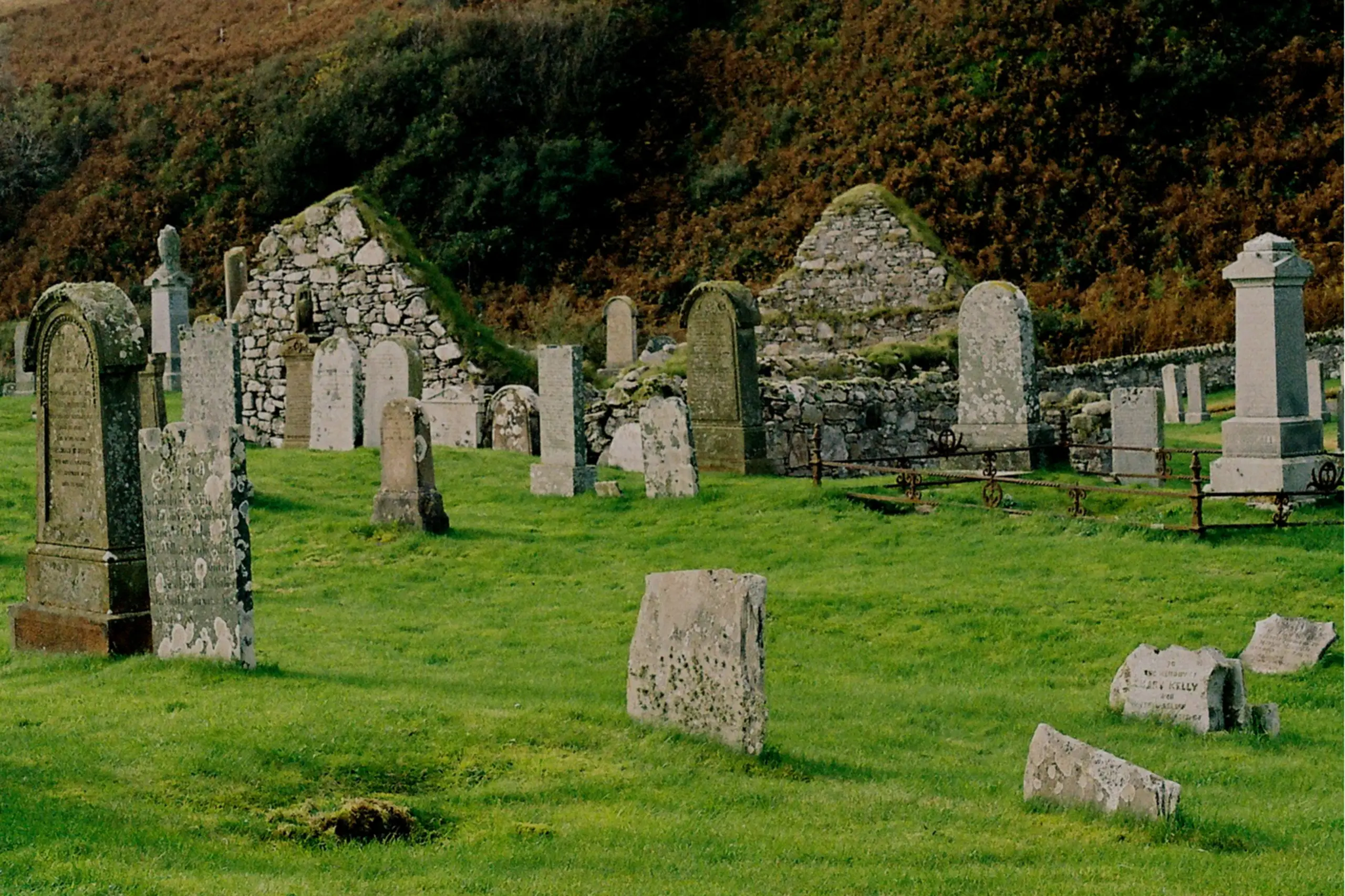
Up on the dunes by the anchorage there are a surprising number of atmospheric burial grounds. The roofless St Nechtan's chapel is late medieval and contains a number of mouldering graveslabs, including one with a rather fine knight in relief. The military graveyard just to the east of the chapel is remarkably well tended, as these places always are, but contains very few graves, presumably because most of the American graves have been removed. One which is still there is of an 'unnamed negro' which is a bit non-PC these days. It is perhaps surprising that there are any war graves here at all, so far it seems from the European action, let alone one of a 'negro'. But ships did come to grief around these parts, most notably towards the end of the First World War. The British cruise liner the SS Tuscania was carrying American troops to Europe when she was torpedoed by a German U-boat in February 1918. Then in October the Otranto, an armed merchant cruiser, also carrying American troops, collided with another ship and sank. These tragedies are commemorated by the very prominent monument on the Mull of Oa, erected by the American Red Cross in 1920. In all there are 190 Commonwealth War Graves on Islay in 12 locations.