Lismore, derived from the Gaelic Lios Mor meaning 'the great garden', is an island where there has been no pub since 1881, and even now there is no hotel or restaurant. Instead, there is peace and quiet, farming on remarkably fertile soil (based on limestone), lots of wild flowers, birds, wee roads, and not too many holiday homes. Most people on Lismore live there, about 170 of them (in the 19th century there were about 1500, too many for the island to support).
Apparently St Columba thought Lismore was far too fertile and comfortable for a monastic settlement (although in about 500AD he was beaten to it by his brother monk St Moluag). So he went off to Morvern to found the church at Kiel near Loch Aline, a much tougher environment and so more suitable for serious monkish activities.
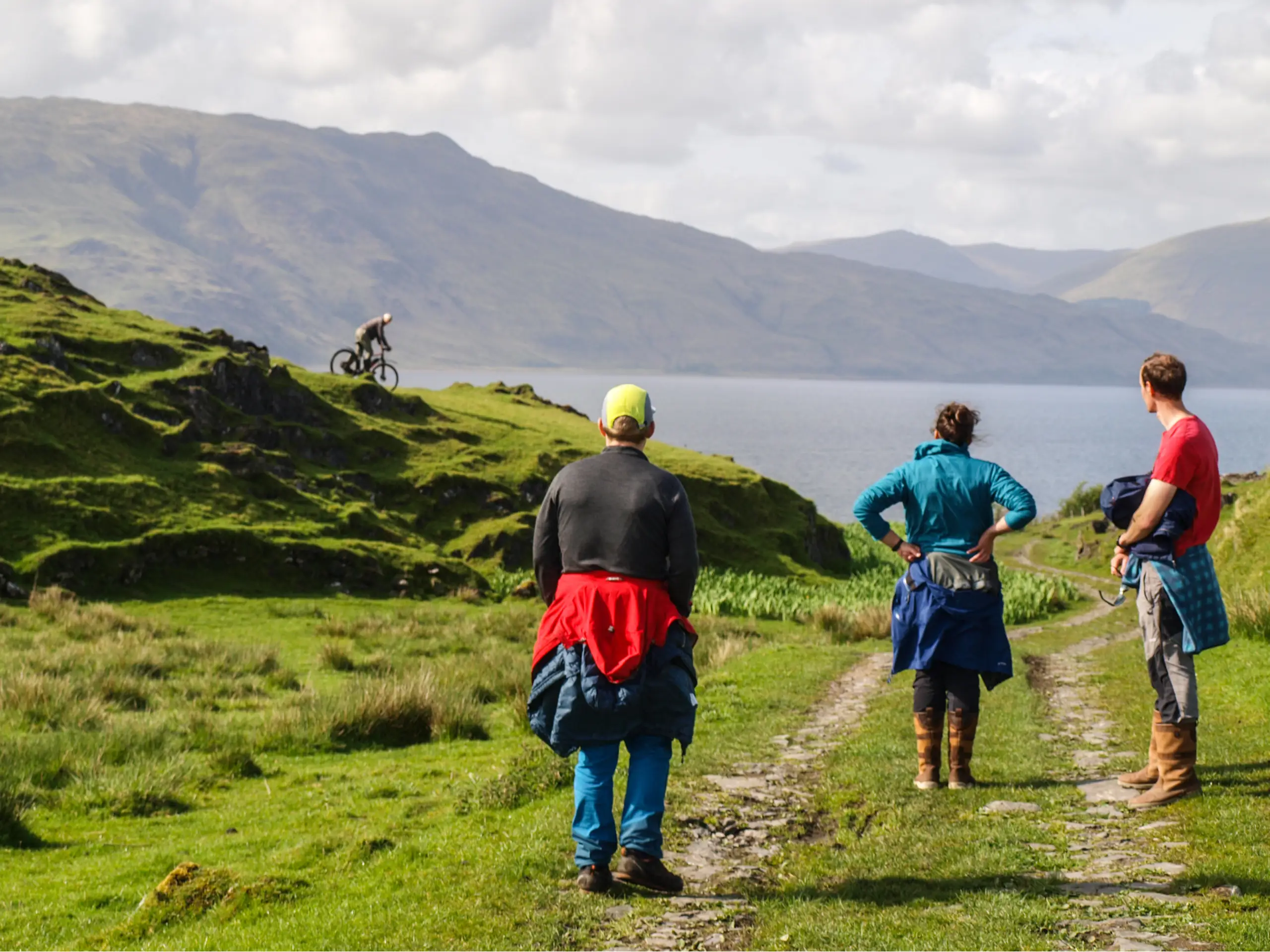
A good half-day circular walk, starting at any of the northern anchorages, takes you to most of the interesting things to see: the church at Clachan, Castle Coeffin, Tirefour Broch, limekilns at Port Ramsay, and the Heritage Centre (with the only café on the island). For example, from Achnacroish walk past some cottages and then along the coast (a narrow path with mud and brambles to begin with) to the Tirefour Broch at Port Moluag, then along very small roads to Port Ramsay, round the bay and over the hill past Port na Moralachd to Castle Coeffin, to the centre of the island again and the church at Clachan, tea and buns at the café, then back along the road to Achnacroish. One time we came across a shepherd gathering his sheep not on foot, or on a quad bike, but on an electric bike which clearly kept him pretty fit.
Lismore does not seem to be much visited by boaties, or by others, even though it is very close to Oban by ferry and just a stone's throw from Appin, also by ferry but not for cars. Once there you can hire bikes (ph 07376 425996). So it is all quiet and peaceful. But there is one blot on the landscape, the granite quarry at Glensanda over the Lynn of Morvern, the only coastal quarry in the UK. You can see it from almost everywhere on the west coast of the island.
If you want to know more then read Robert Hay's 'Lismore, the Great Garden', Birlinn, Edinburgh, 2009. And for archaeology, history and landscape take a look at an informative short film.