Frank Cowper got it exactly right in 1896: "This is really an ideal anchorage. Beautiful scenery, perfect safety, a good inn close by, and mail steamers every day except Sunday. To be anchored in such a place goes far to reconciling one to the miseries of the W. Highland climate. Loch Aline is almost perfection" (Sailing Tours: The Yachtsman's Guide to the Cruising Waters of the English and Adjacent Coasts, Part V, The West Coasts of Scotland, the Orkneys, and the west coast of the North Sea. Frank Cowper, Upcott Gill, London, 1896).
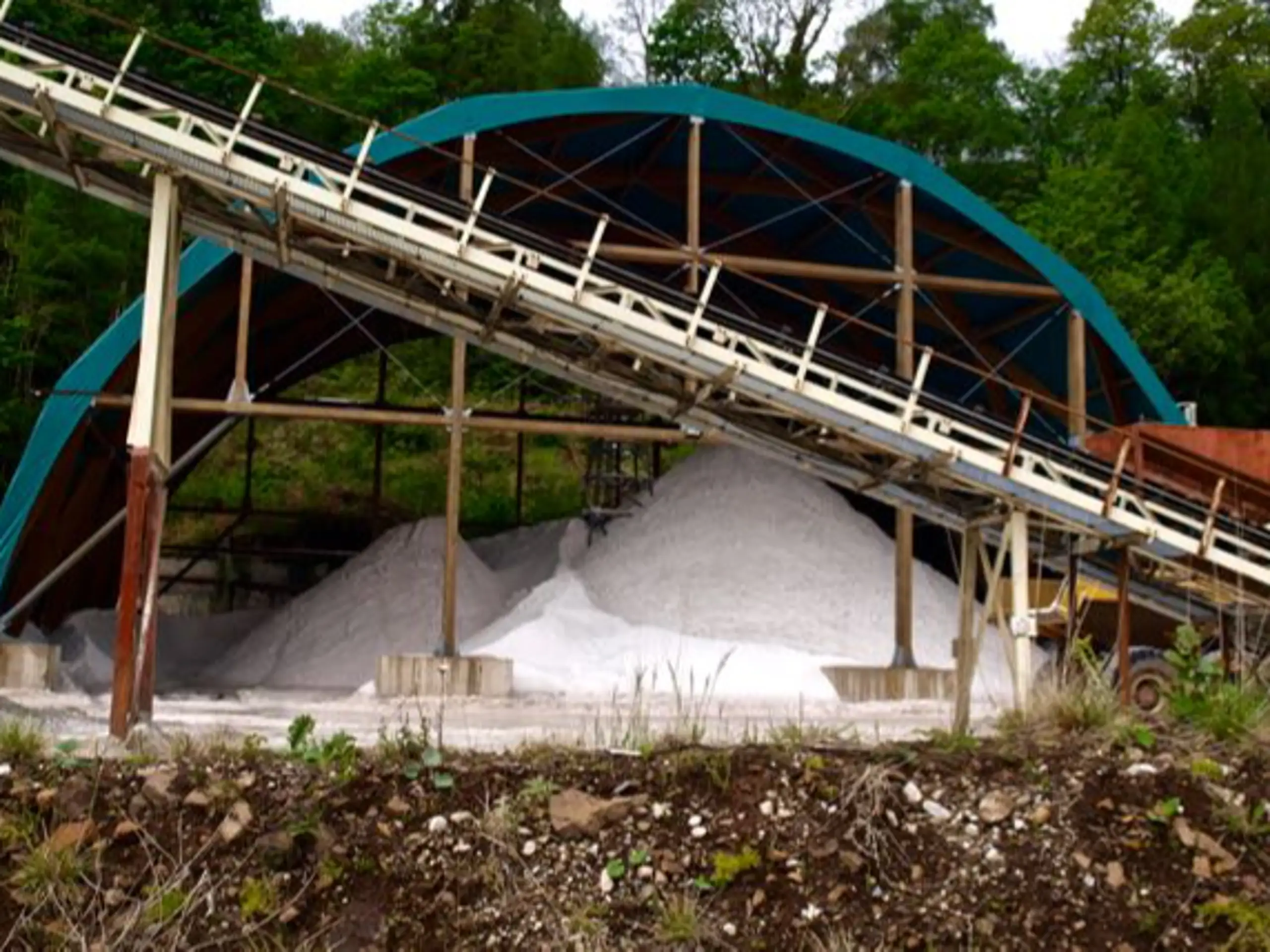
These days it is a much more promising place than the first impression you get from the silica quartz sand mine just beyond the narrow entrance. This opened in 1940, was closed down in 2008 as being 'uneconomic' with the loss of 11 full-time jobs, but re-opened in 2012 and is now working flat out. By 2018 the work force was up to 23. And off goes the high quality sand by ship to Runcorn, and much of it then on to Italy to make glass for solar panels. Watch their film! You might strike lucky and catch one of the tours which run during the Morvern highland games in July, or you could try a polite phone call to 01967 421324.
The village itself is not much of a place but there is a basic shop, and right next to it the Whitehouse Restaurant which closed in 2021 but then reopened under new ownership (ph 01967 421356). It is said by a reliable source to be very good, and so it should be at £65 per person for dinner (cheaper for lunch). Pontoons arrived in 2011, with excellent showers and toilets, and all very friendly (ph 07583 800500). It's a pity they were not installed right by the old harbour, but maybe it is too shallow there. So it is a short walk to the village along an illuminated path, past the silica mine so you do get a lot of sand on your boots. The visitor moorings are even further away. This was all put together by the Morvern Community Development Company to encourage more business and employment after the silica mine closed down.
The Loch Aline Hotel passed into new ownership in 2023. It is down on the shore with views overlooking the Sound of Mull (ph 07341 946222). Last time I was there I was astonished to find a helicopter outside, not a visiting Russian oligarch, just a couple of blokes carrying stuff around for the fish farms. Sadly the hotel no longer has a bar or restaurant open to non-residents.
Below the village by the stone pier you will find the well-known Liz's (was Jean's) Lochaline snack bar selling what snack bars sell, just £2 for a coffee and scone sitting out in the sun (or rain) about six years ago I think. After 27 years, Jean sold the business and retired. Let's hope her successor is just as successful. In 2016 Jean was awarded the BEM for her efforts — well deserved, unlike so many higher up the Honours List. This pier was once called the Relief Pier because it was constructed in 1843 to provide work for the local population which had been decimated by the potato famine and the clearances. Instead of money they earned food. The pier was restored in the late 20th century. It is worth reflecting that it was to here and around about that the St Kildans were evacuated in 1930. It provided their first sight of trees, let alone of roads and cars.
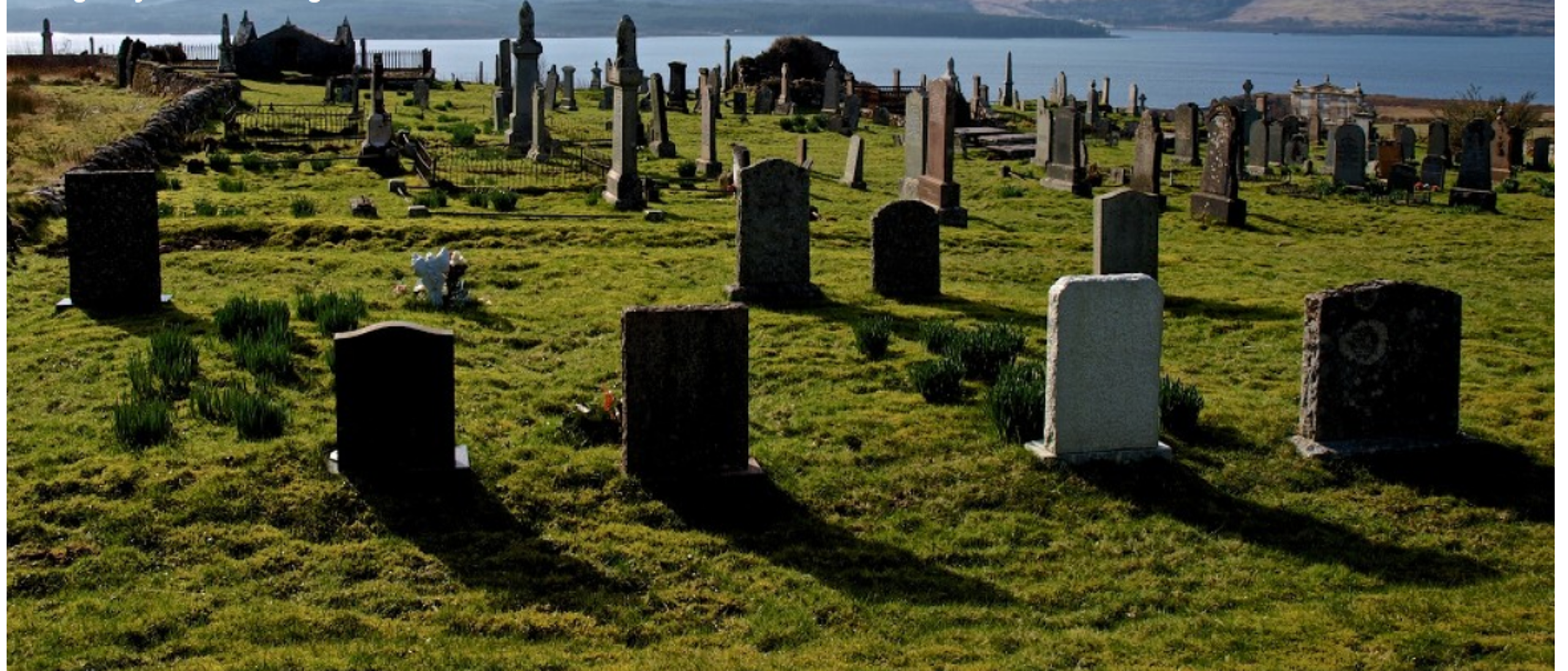
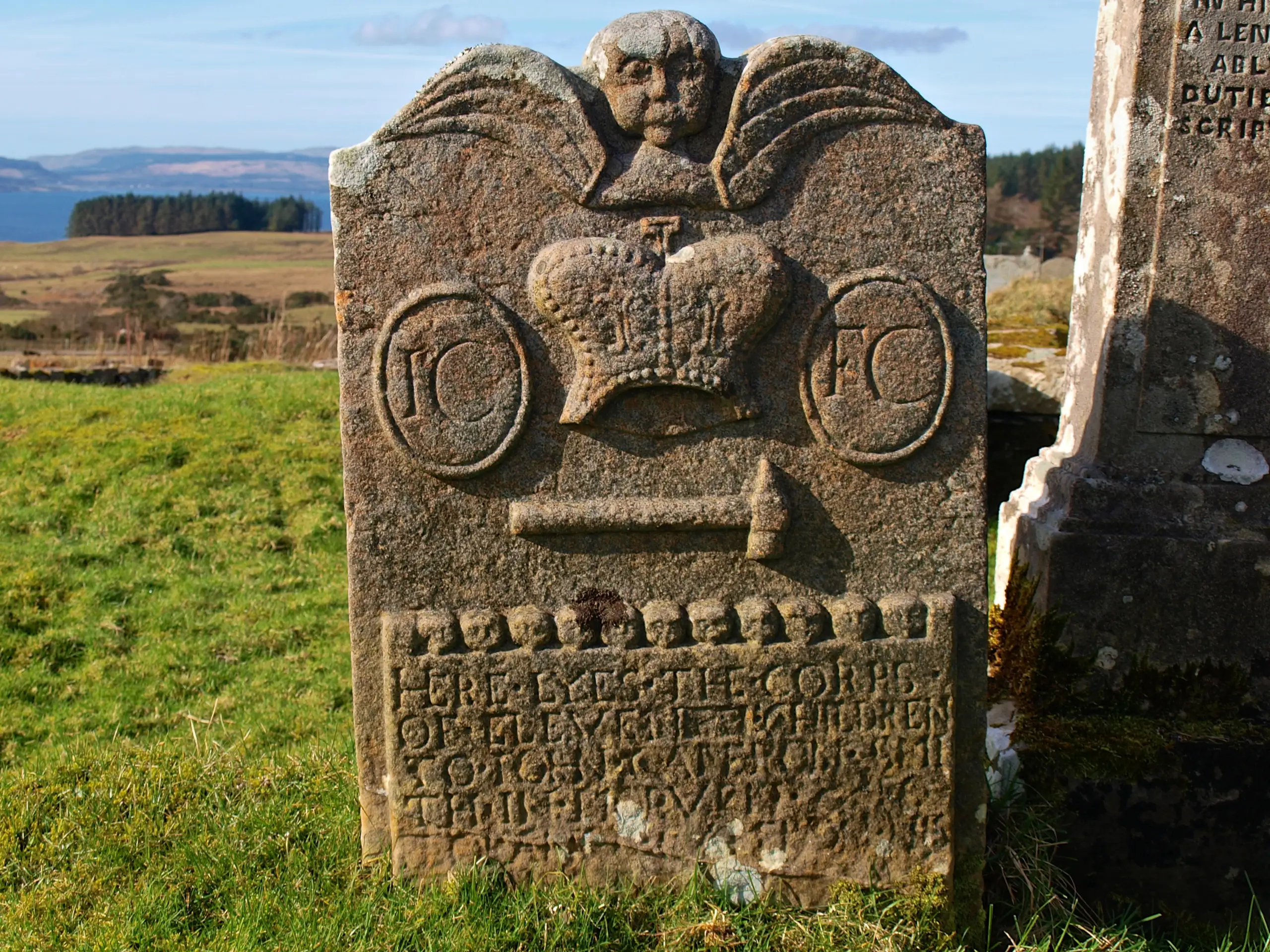
Definitely take a walk up the hill behind the village to Kiel Church. This is where St Columba decreed a church should be built, Kiel is an abbreviation of Cille Choluimchille, meaning the cell of St Columba of the church. The church itself, probably built in 1898 on the site of the very much earlier St Columban chapel, is not that interesting but two other things are. First, the graveyard with a lovely view across the gravestones up the Sound of Mull (with deer last time I was there on a quiet evening). In the southeast corner you will find an interesting 18th century gravestone commemorating the 11 children of John and Florans Cameron — 11 little heads all in a row. Second, the small building next to the church, once a school built in 1774, contains a wonderful collection of medieval Scottish graveslabs and free-standing crosses decorated with swords, warriors, churchmen and birlinns. These are very well displayed with excellent information about them.
Back by the loch, the walks along either side are wonderful, particularly I would say on the east side. Coming from the south you will find a sign to Tennyson's waterfall by Allt na Samhnachain, apparently he visited in 1853. It sounds spectacular and I have yet to visit. And a burn with 200-million-year-old mollusc-like fossils, and a small long-abandoned limekiln. Eventually at the head of the loch you pass an old boathouse before arriving at the gates of Ardtornish House, a late 19th century neo-Gothic pile with an amazing clock tower. In fact close-up it doesn't have quite the fairy-tale impression it gives from a distance, being in a curious way rather plain and dull. Maybe this is because it is now all or mostly holiday flats, and because it is of concrete construction, albeit faced with red sandstone. But the grounds and gardens are really nice to wander around with lots of lovely trees and, in season, 200 different types of rhododendron in flower (£4 entrance). And there is a small gift shop. The estate website is certainly enthusiastic and informative. And you can get married here.
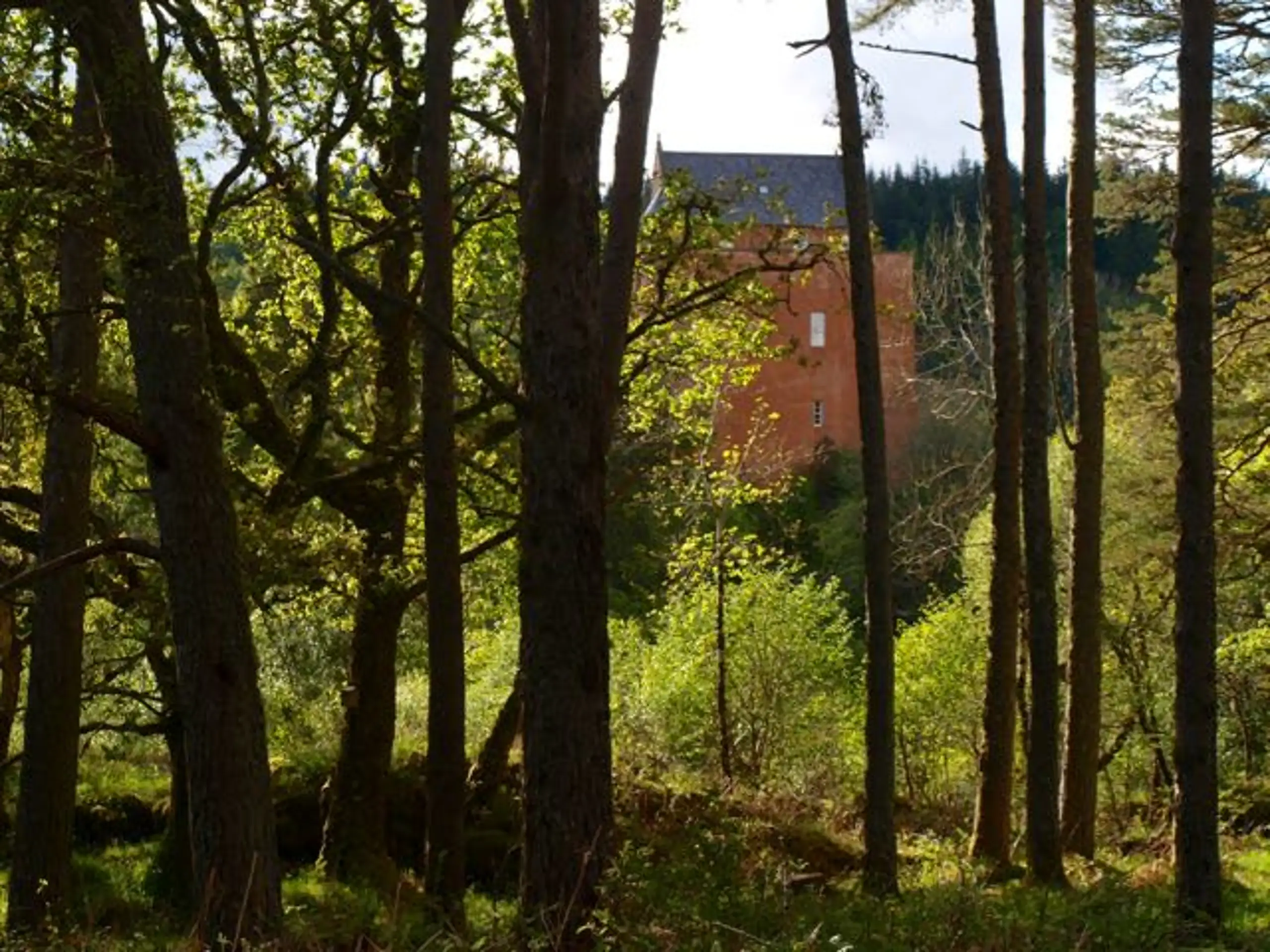
More architecturally interesting is just next door, the now very reconstructed and restored 15th century — and sort of orange — Kinlochaline Castle, built for the MacLeans of Duart as a tower house. You cannot get in but even the outside is worth a view. There is a high keep, and perched on top what looks like a small highland house. It peeps out just above the trees as you sail up the loch.
From the anchorage in the southeast corner of the loch, there is another great walk with wild flowers and views, not round the loch but along the coast to Ardtornish Bay with its castle.