"The harbour of Cana (sic) is small, but pretty well sheltered, and commodiously situated for vessels bound either northward or southward; and on that account is more frequented than any of the harbours in that neighbourhood" (Nautical Descriptions of the West Coast of Great Britain from Bristol Channel to Cape-Wrath. Murdoch McKenzie, London, 1776). So wrote Murdoch Mackenzie in 1776, and he would have known because he was busy making the first proper charts of the Hebrides at the time. The same is true of Canna today. It has not only a magnificently safe and attractive anchorage, but it is also very special for me from the first time I sailed in on a chartered yacht in 1975. What a wonderful serene and scenic anchorage I found on that quiet evening in summer sunlight. Out at sea it may have been blowing hard, but once in the anchorage it was pastoral, surrounded by farmland so lovingly tended by the Mackinnon family who still farm it today. Years later I read Robert Buchanan's very similar feelings on his first visit in 1871: "It is a difficult job indeed to pick our way among the rocks, in the teeth of wind so keen; but directly we round the corner of the cliffs, the little landlocked bay opens safe and calm, and, gliding into five-fathom water, we cast anchor just opposite the Laird's house" (The Land of Lorne including the cruise of the “Tern” to the Outer Hebrides. Robert Buchanan, Chapman and Hall, London, 1871 ).
Canna was also special in 1988 when I sailed my first young family there in our newly acquired Contessa 32. And it was very special for family holidays in the 1980s and 90s when Ben, Margaret and Oli were growing up. Year after year we rented Tighard from John Lorne Campbell who had owned the island from 1938 until he gave it to the National Trust for Scotland in 1981. Sometimes just the family, sometimes with friends. It is the 1905 house peeping through the trees above the laird's big house. There are not many places on the west coast where you can rent a place to park the family with easy access to a safe anchorage for day or longer trips by boat, and Canna was then the best. We made up Canna Tig around Tighard; the hunter stood at the front door with their eyes shut to the count of 20 while everyone else dispersed to hiding places around the outside of the house. The idea was to get to the front door without being caught. Great fun on a summer evening. Tighard later became a bed and breakfast establishment — which may have had its uses for cold, wet and disgruntled crew who wanted a comfortable night ashore. The couple who had taken over Tighard in 2013 left in 2021, and it is now a guest house with three rooms.
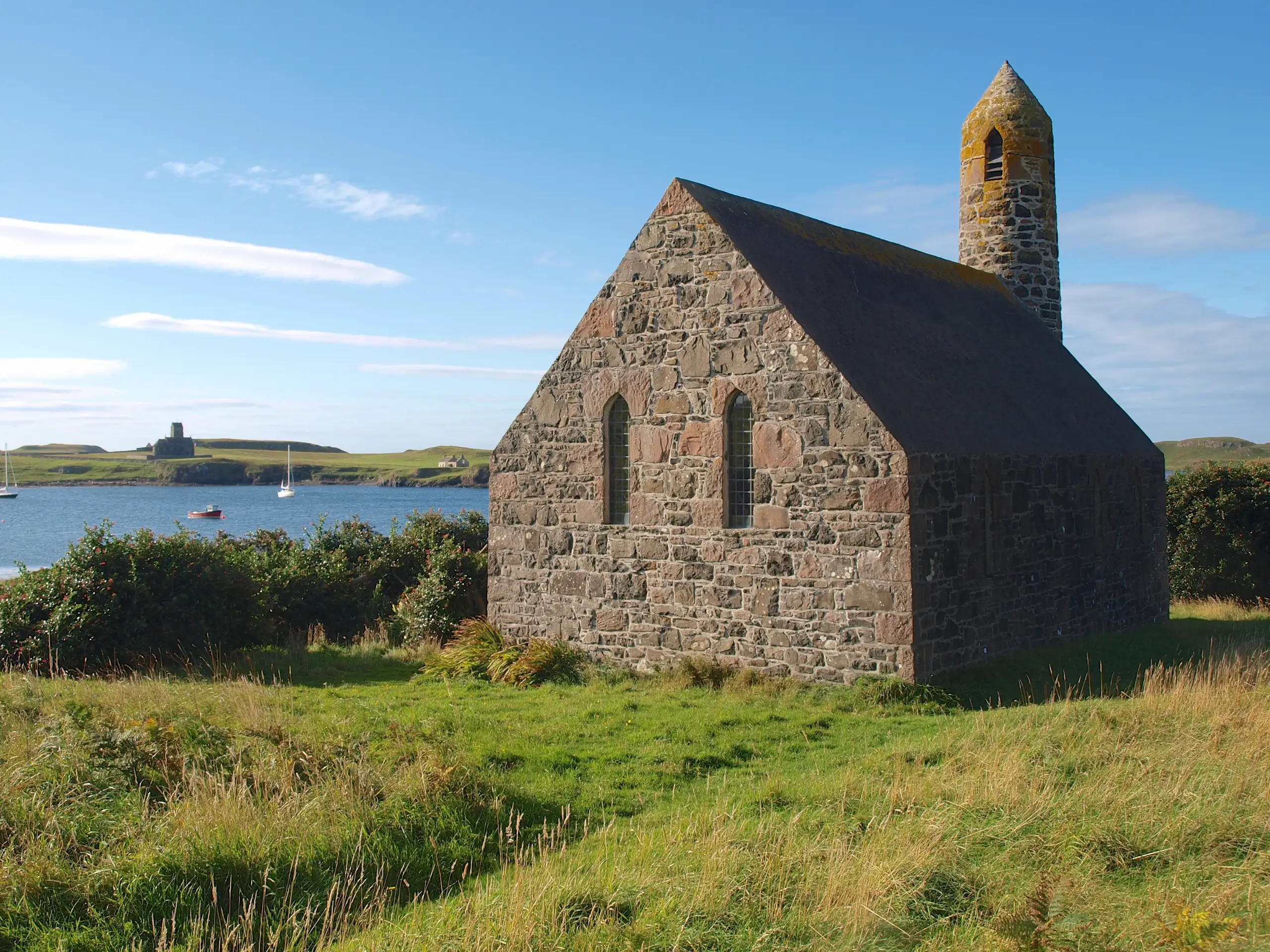
Notwithstanding the tiny population of around 17 people (but no children), there is a surprising amount to see and do on Canna and the immediately adjacent island of Sanday which is connected by a newish bridge (the old one blew away in a gale). First up from the anchorage is the small church with the round tower, not as old as it looks. It was completed in 1914. It is rather pretty inside but dilapidated, but I am not sure about the ornate 1969 gate to the churchyard. Currently funds are being raised to restore it, so please help because it really looks as though it needs it. It is used for occasional Church of Scotland services.
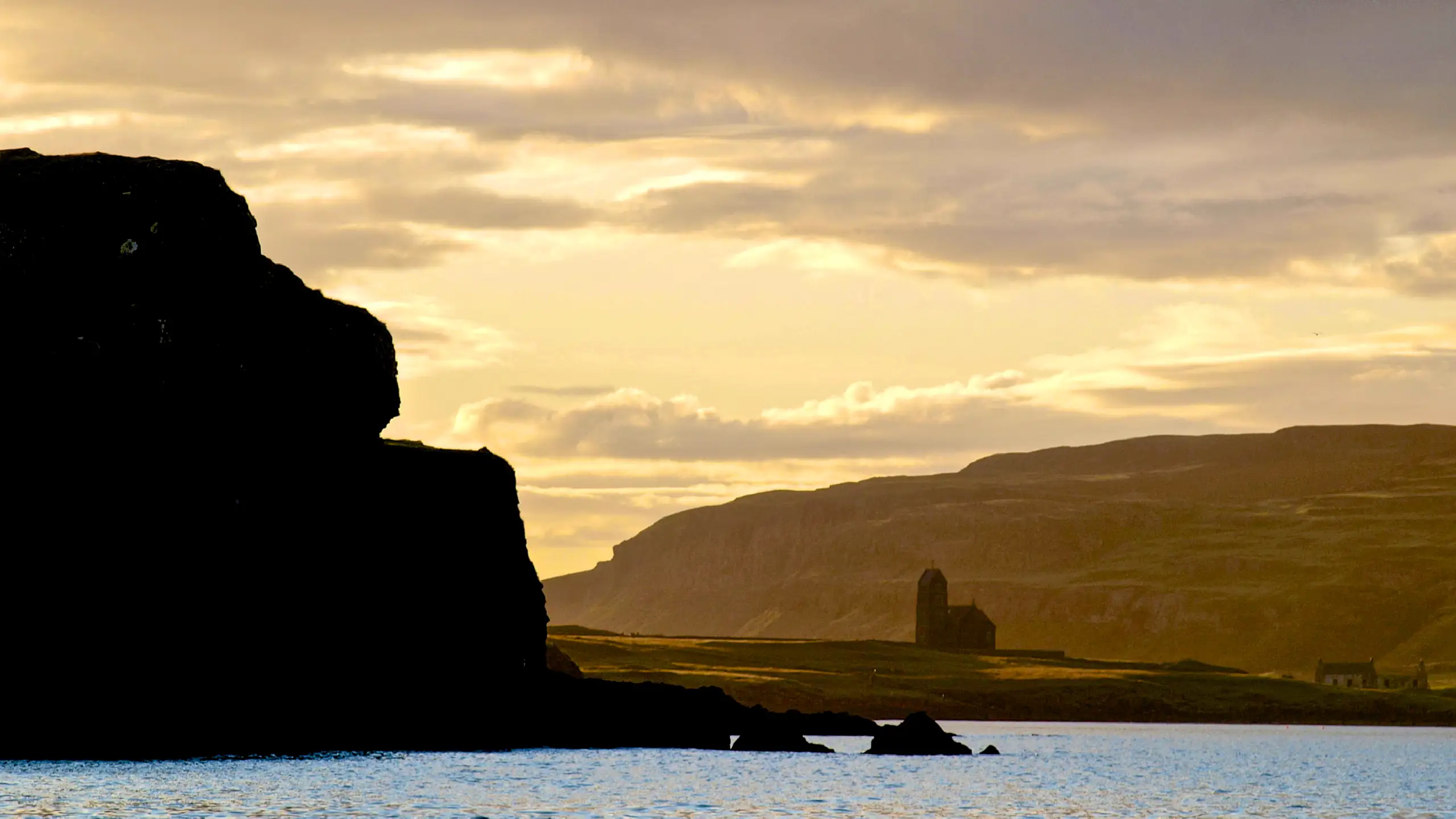
The larger late-19th century Roman Catholic Church of St Edward the Confessor on Sanday, a seamark if ever there was one, had been sadly neglected for years until the National Trust for Scotland tried to restore it and turn it into a Gaelic Study Centre. Despite a grand opening by Princess Anne in 2001, the roof soon leaked, the building has never been used, it has been vandalised, and there was dispute between the National Trust, the Hebridean Trust, the architect and the contractor over responsibility for this terrible waste of nearly £1million (Restoring Canna's Chapel, Alasdair Ross McKerlich, 2007). It was then rebranded as the Camus Arts Centre, so we await developments, if any.
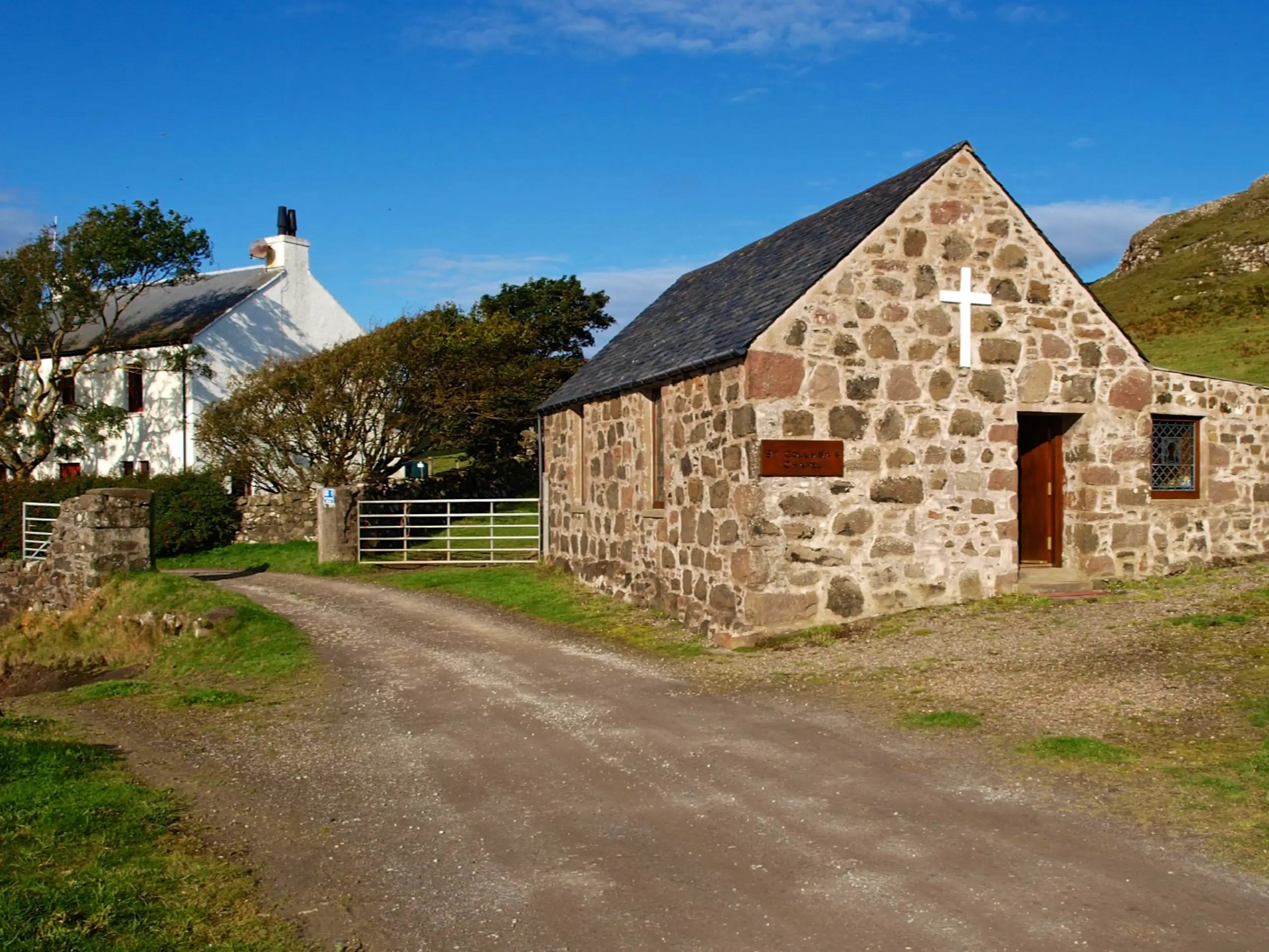
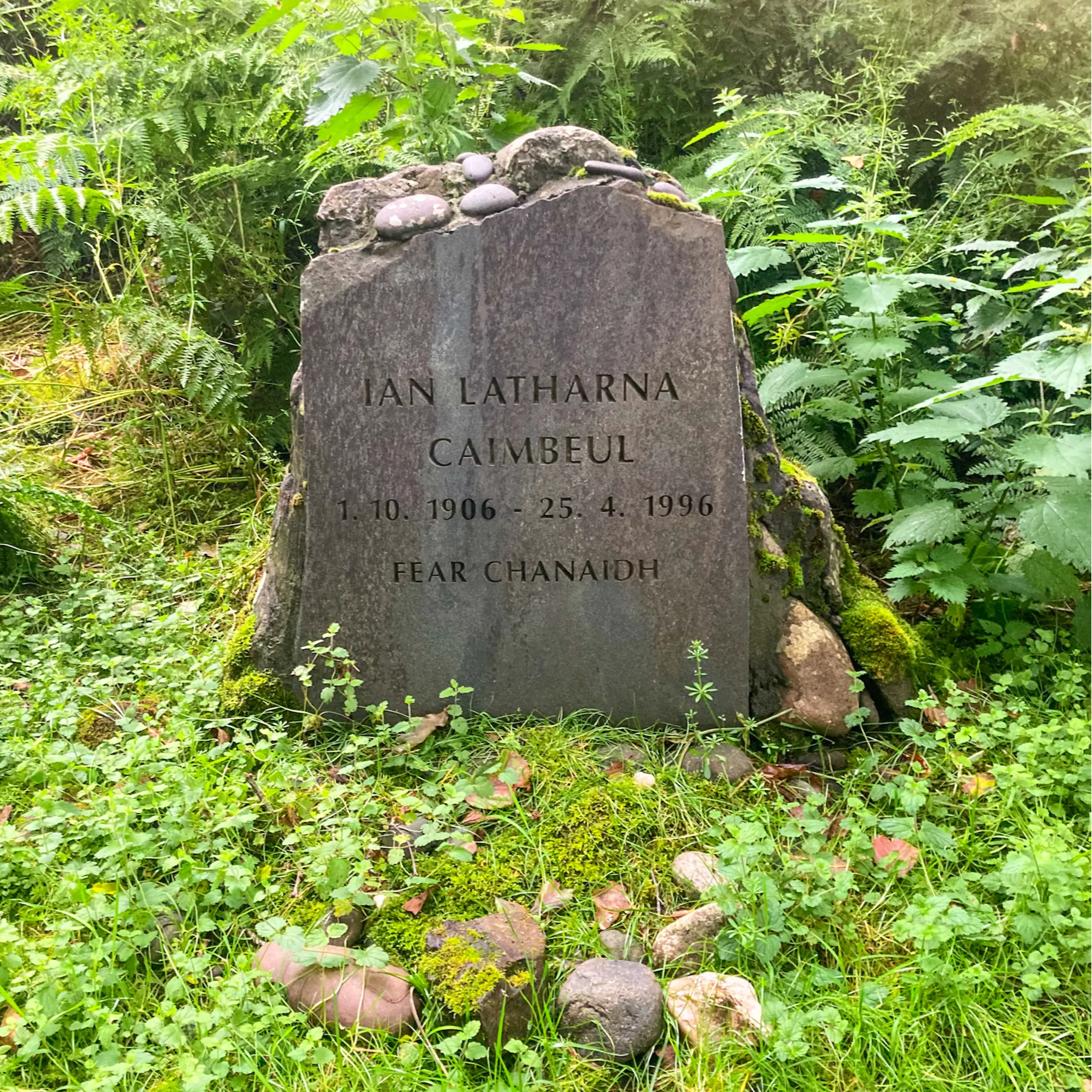
The small Roman Catholic Chapel on the track to the farm is the only active church on the island. It has been lovingly restored and is quietly attractive. Behind the chapel a track runs up to an old burial ground and the remains of an 8th or 9th century Celtic cross, and the so-called punishment stone. It has a small hole into which the thumb of the miscreant was apparently wedged to persuade him — or her — to improve their ways. Tucked away in the small wood on the way, full of bluebells he himself planted as a young man, you will find Lorne Cambell's grave.
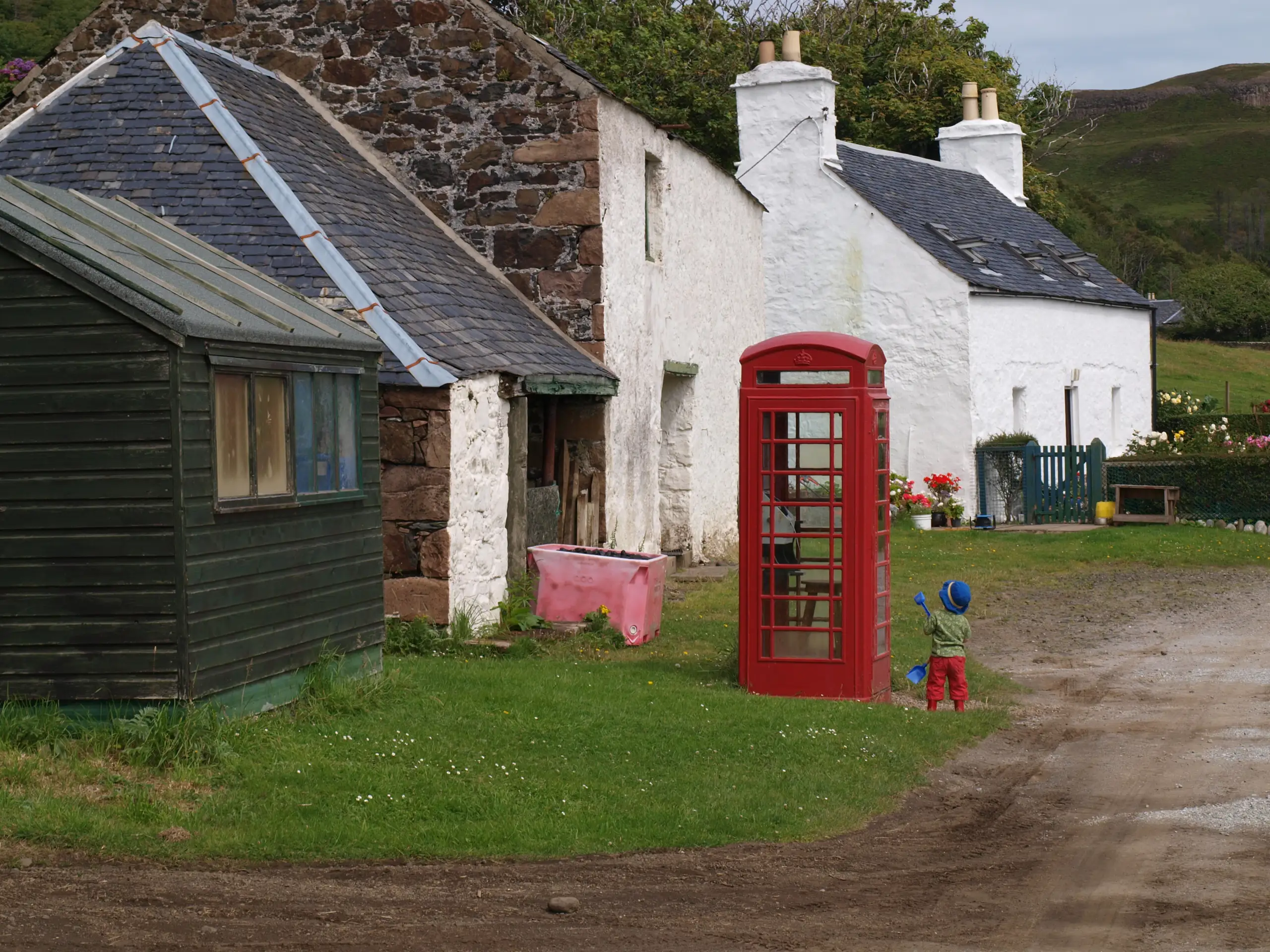
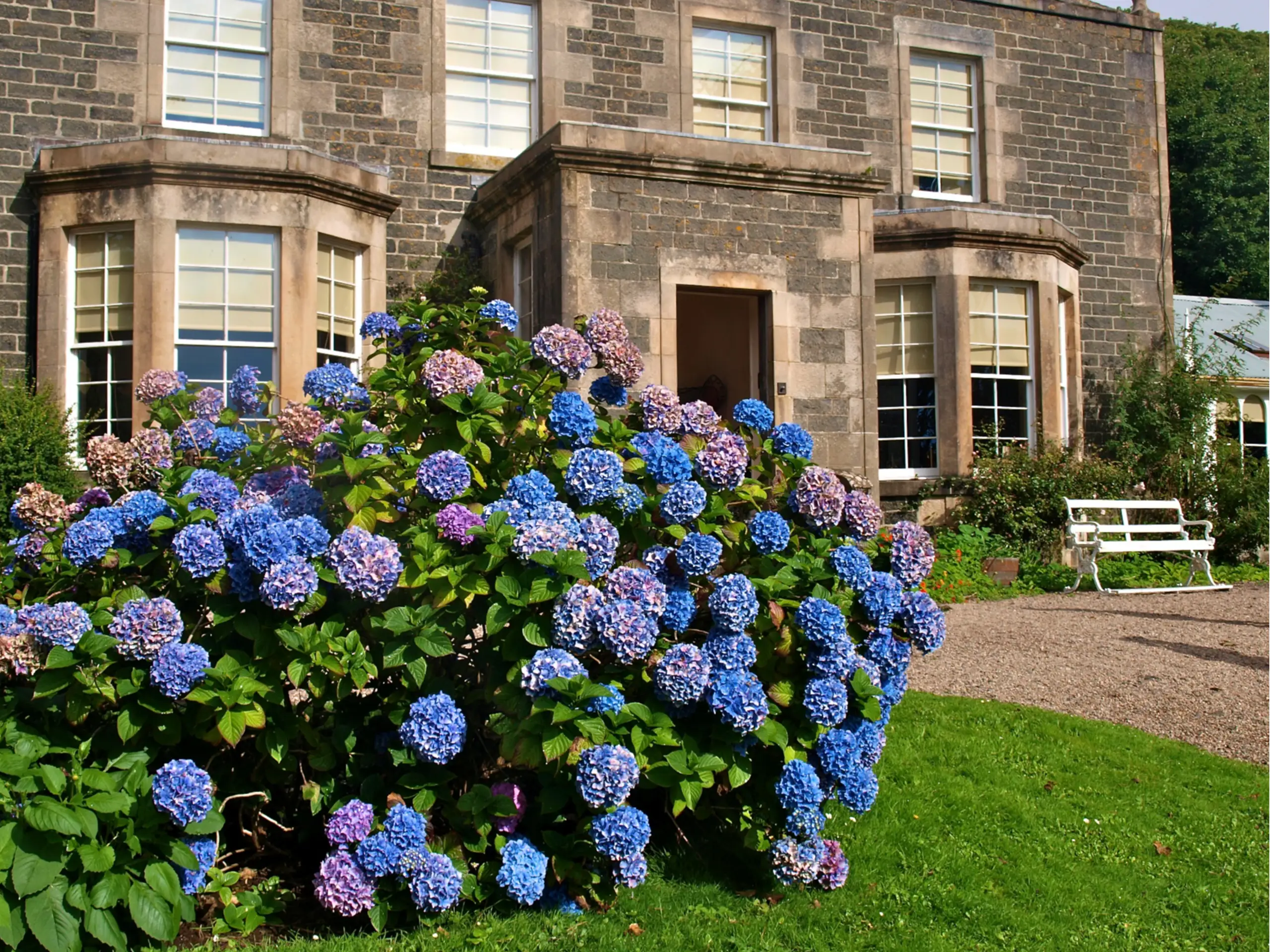
The impressive big house — Canna House, circa 1865 — contains an internationally renowned collection of Gaelic literature, collected by John Lorne Campbell. His American heiress wife, Margaret Fay Shaw, was a talented photographer and folklorist of all things Hebridean. The completely restored (at huge expense) house opened to the public in 2025, with quite small guided tours of I think six at a time, so it will be crucial to book well ahead. The garden is open to the public at any time. A bit further along amongst the farm buildings is the 'Old Laundry' which has a small display of various crofting bits and pieces.
Much longer walks are to the souterrain and remains of a Viking grave near Tarbert in the centre of the island, but you need the OS map to find them. And there is more archaeology further on — duns, forts, hut circles etc.
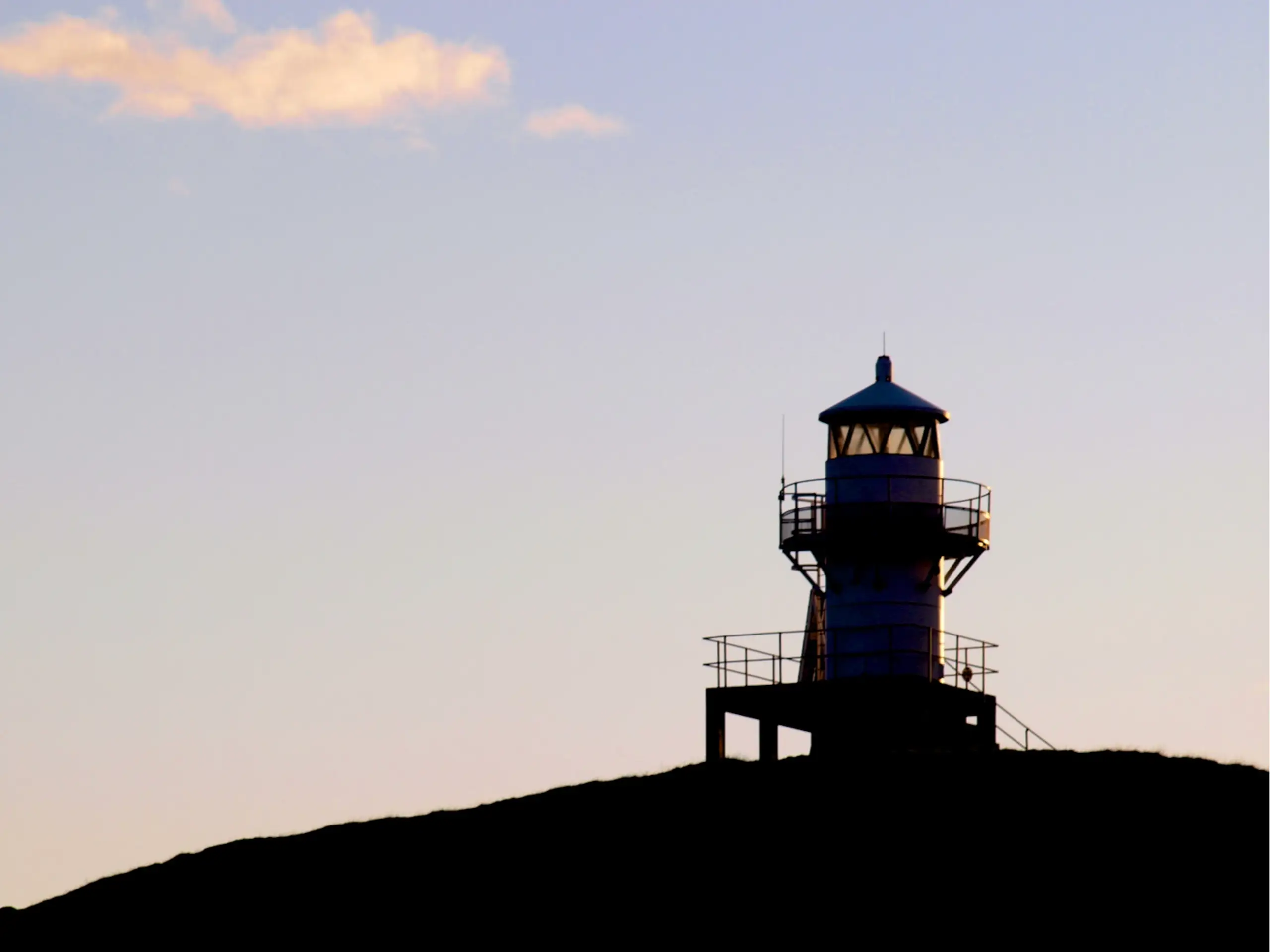
More or less all the Scottish cliff-nesting seabirds can be found on Sanday. About half-a-mile west of the lighthouse there is a stack with loads of puffins, fulmars, shags, kittiwakes, razorbills and guillemots. It is second only to the Harp Rock in the Treshnish Islands for looking at nesting seabirds in this part of the west coast. Take binoculars and on the way be prepared to be bombed by great skuas (bonxies) unless they have been wiped out by the avian flu epidemic in 2023. In the spring and early summer listen out for corncrakes, not that many but increasing in number.
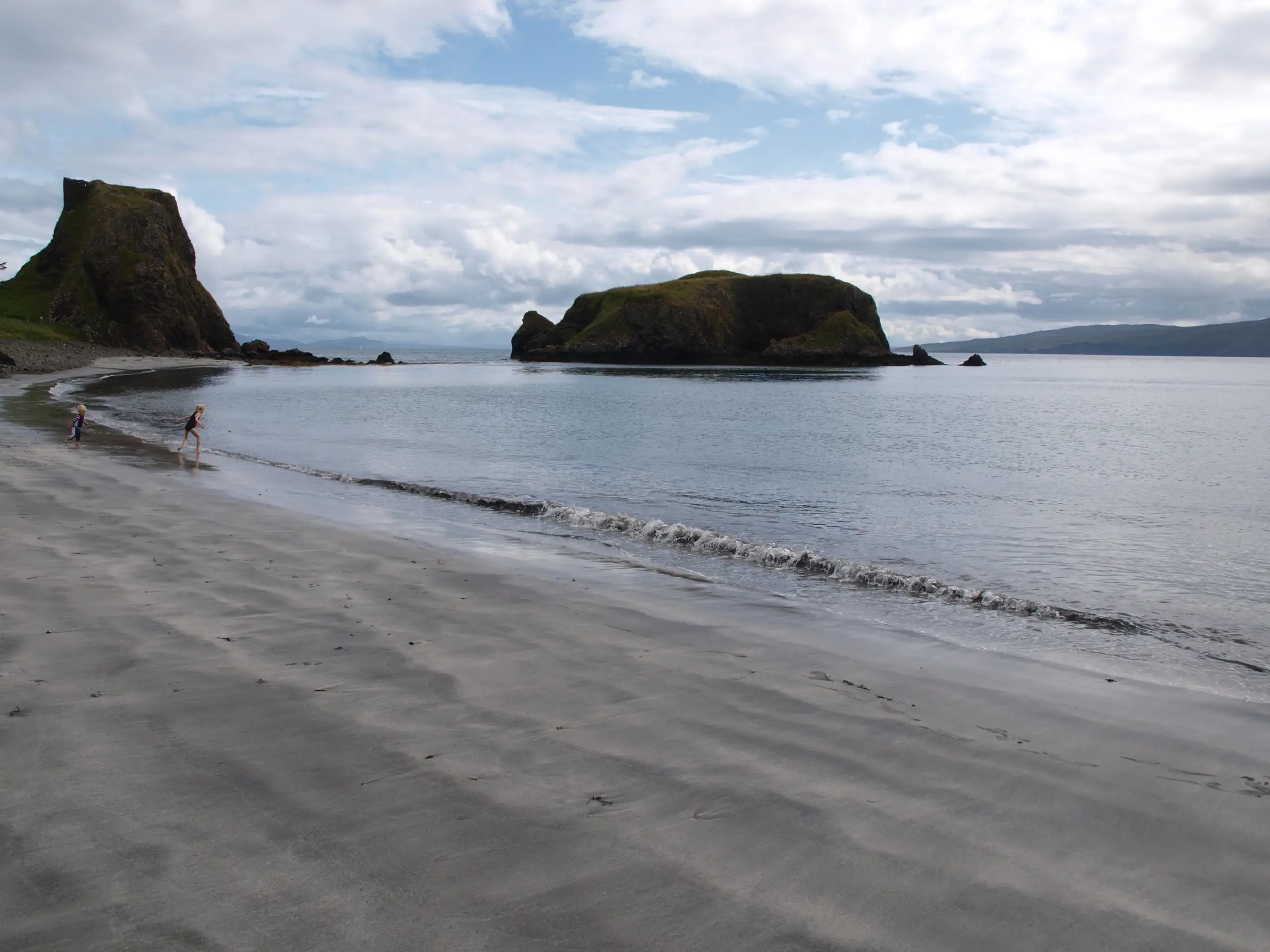
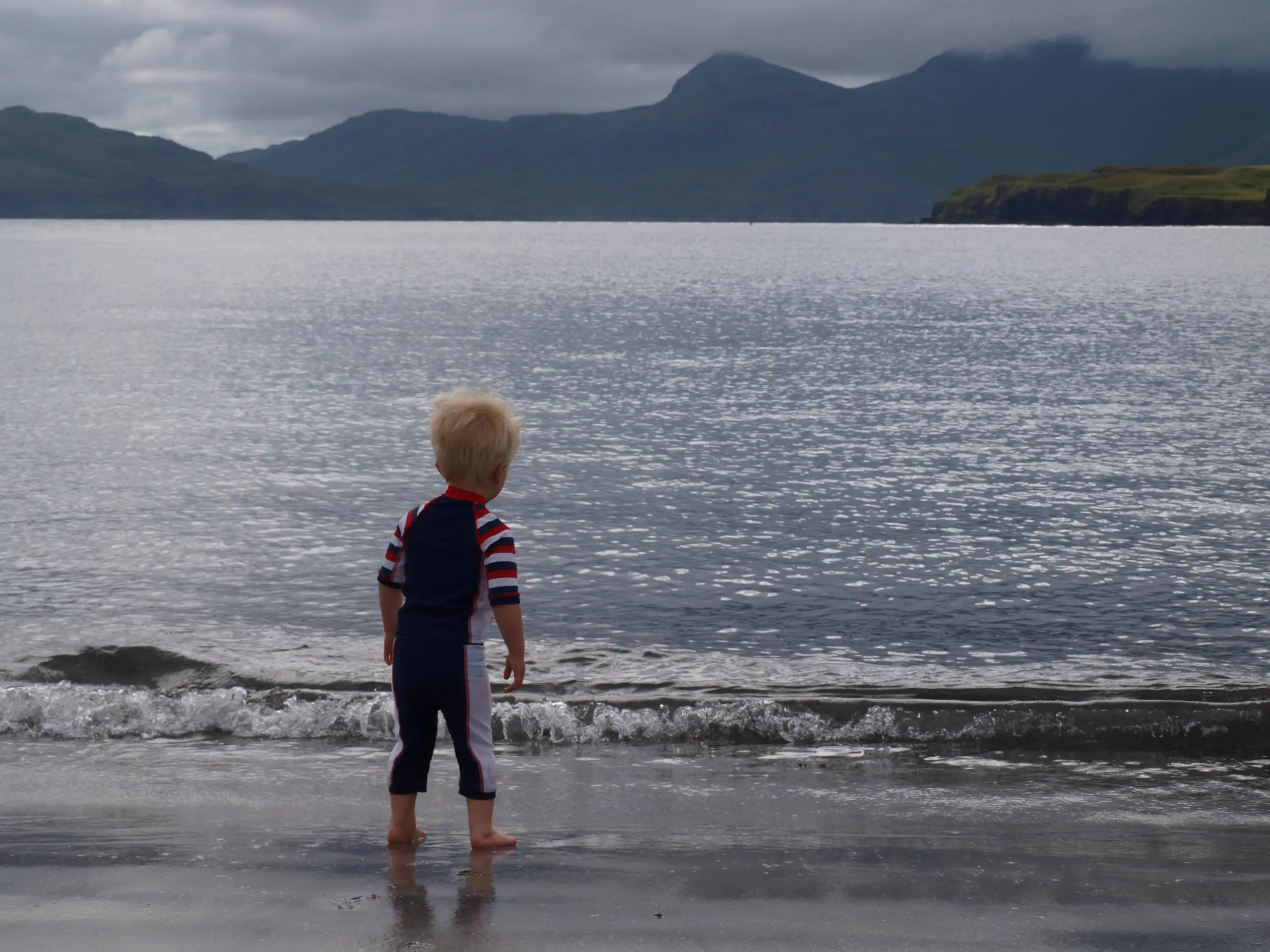
There are two delightful beaches, facing in opposite directions and therefore good in all winds. Facing south, what we used to call the pirate beach (black sand and great views of Rum) just over the hill behind the round tower church (with the sadly deteriorating barn which will be converted into a bunkhouse, and the now almost inaccessible and very tiny 17th century Coroghon castle, once apparently a prison). Facing north, the white sandy beach just over the bridge to Sanday on the right.
Amazingly, there is a small café cum restaurant just along from the round tower church. In 2008 it closed after Wendy Mackinnon moved to Mallaig so her children could get to secondary school easier, an all too familiar problem in the remote parts of Scotland. However, in 2010 it reopened with Amanda McFadden and Aart Lastdrager in charge. Sadly in 2012 they too left. However, it then reopened again, had a licence and did evening meals (ph 01687 482488, but if no signal use VHF channel 8, call sign 'Café Canna'). But in 2018 it was up for grabs — again. However, the owner and chef left in 2025 to set up a new restaurant in Arinagour on Col. From its website, Café Canna in 2026 seems to be back in business with new owners, but worth checking.
Well, more amazingly still, there is a roll-on roll-off ferry pier even though there are no proper roads on the island! Well done somebody in 2006 for being generous to remote and rural communities. Before it was incorporated into this new pier, there used to be an entertaining rock which attracted the occasional boatie. It had been well known for years, indeed it was described by Murdoch Mackenzie in the first Sailing Directions in 1776 with an interesting metric, as being "about a pistol shot from the shore" (Nautical Descriptions of the West Coast of Great Britain from Bristol Channel to Cape-Wrath. Murdoch McKenzie, London, 1776).
Ten moorings were laid in 2013 although they do not seem really necessary to me, the kelp is not that bad if you take care, and there is already plenty of custom for the restaurant from anchored boats in the harbour overnight. The silver lining is there is loads of space to anchor because the moorings are in a semicircle around the old anchoring area. In fact a few of the moorings are too exposed in my view.
And, at last, no more diesel generators. Canna has been powered by its own renewable energy since 2018, although there is still diesel backup for when the wind doesn't blow, the sun doesn't shine, and the batteries are flat.
John Lorne Campbell wrote the most authoritative book on Canna (Canna, the Story of a Hebridean Island. John Lorne Campbell, Oxford University Press, 1984). He nurtured the island for decades before gifting it to the National Trust for Scotland and he continued to live in Canna House until his death in 1996. There is a nice biography if you want to read more (The Man Who Gave Away his Island, A Life of John Lorne Campbell of Canna. Ray Perman, Birlinn, Edinburgh, 2010)
And if you want to see more without going there, take a look at the National Trust for Scotland’s 3D virtual tour.