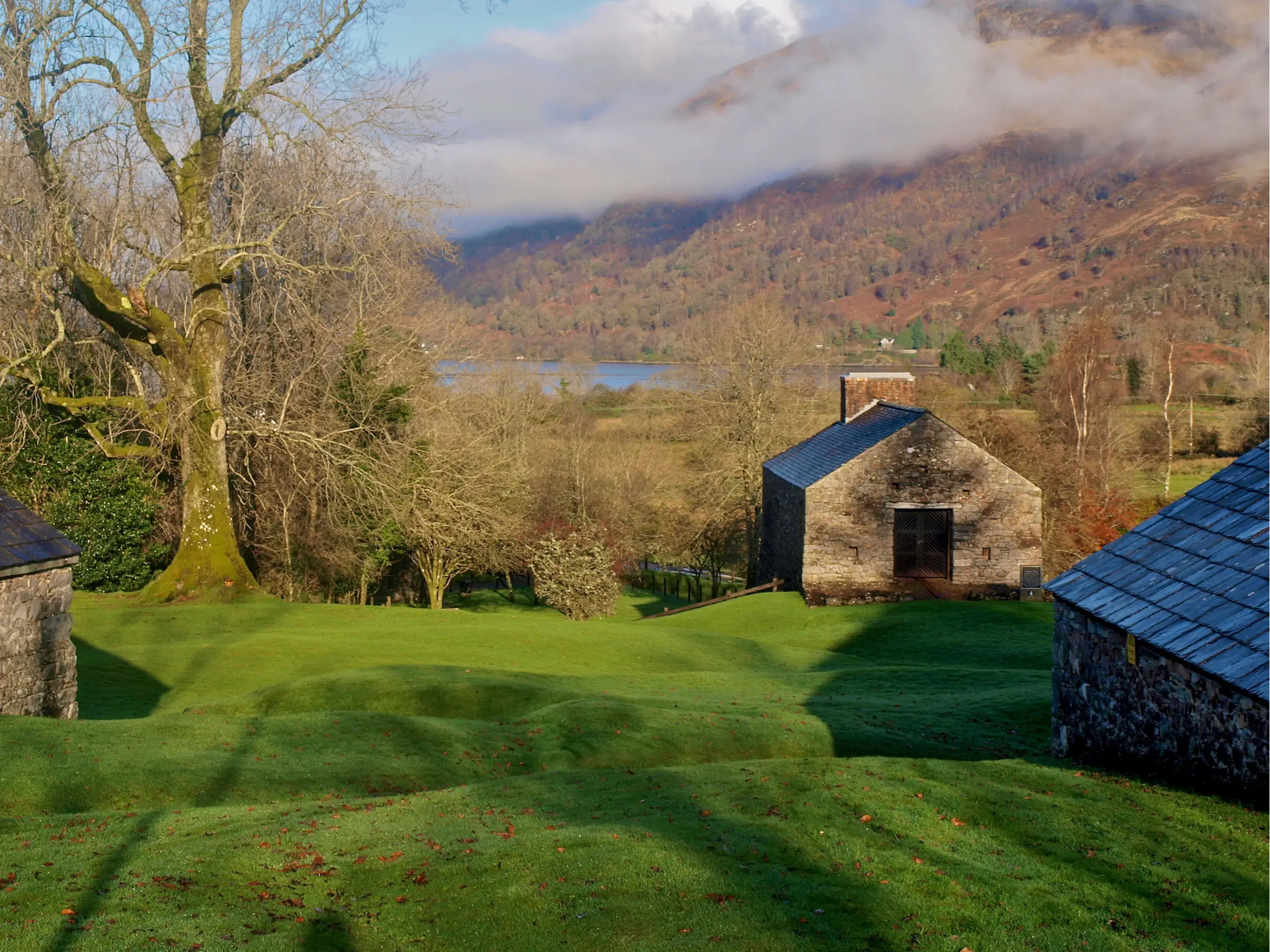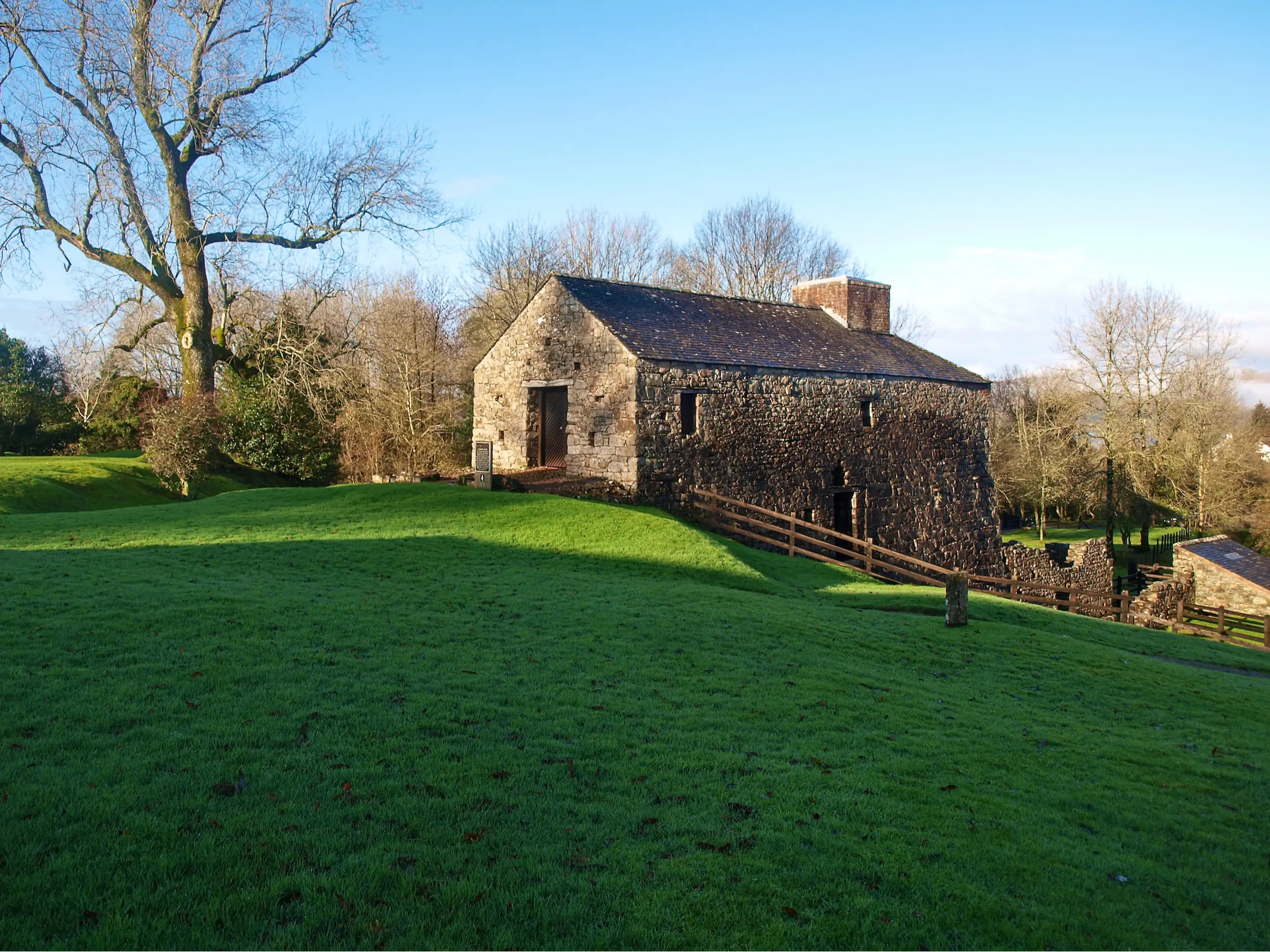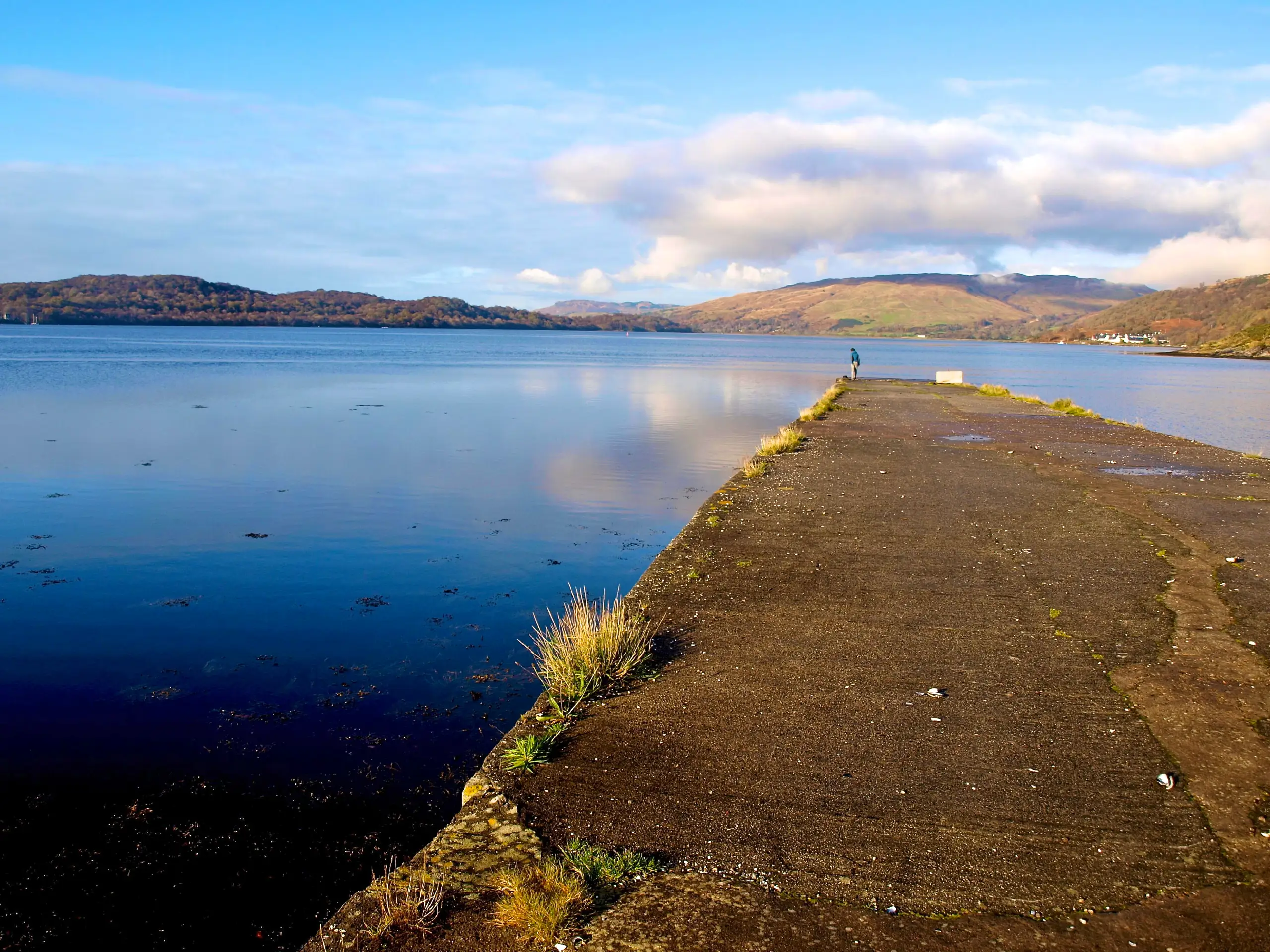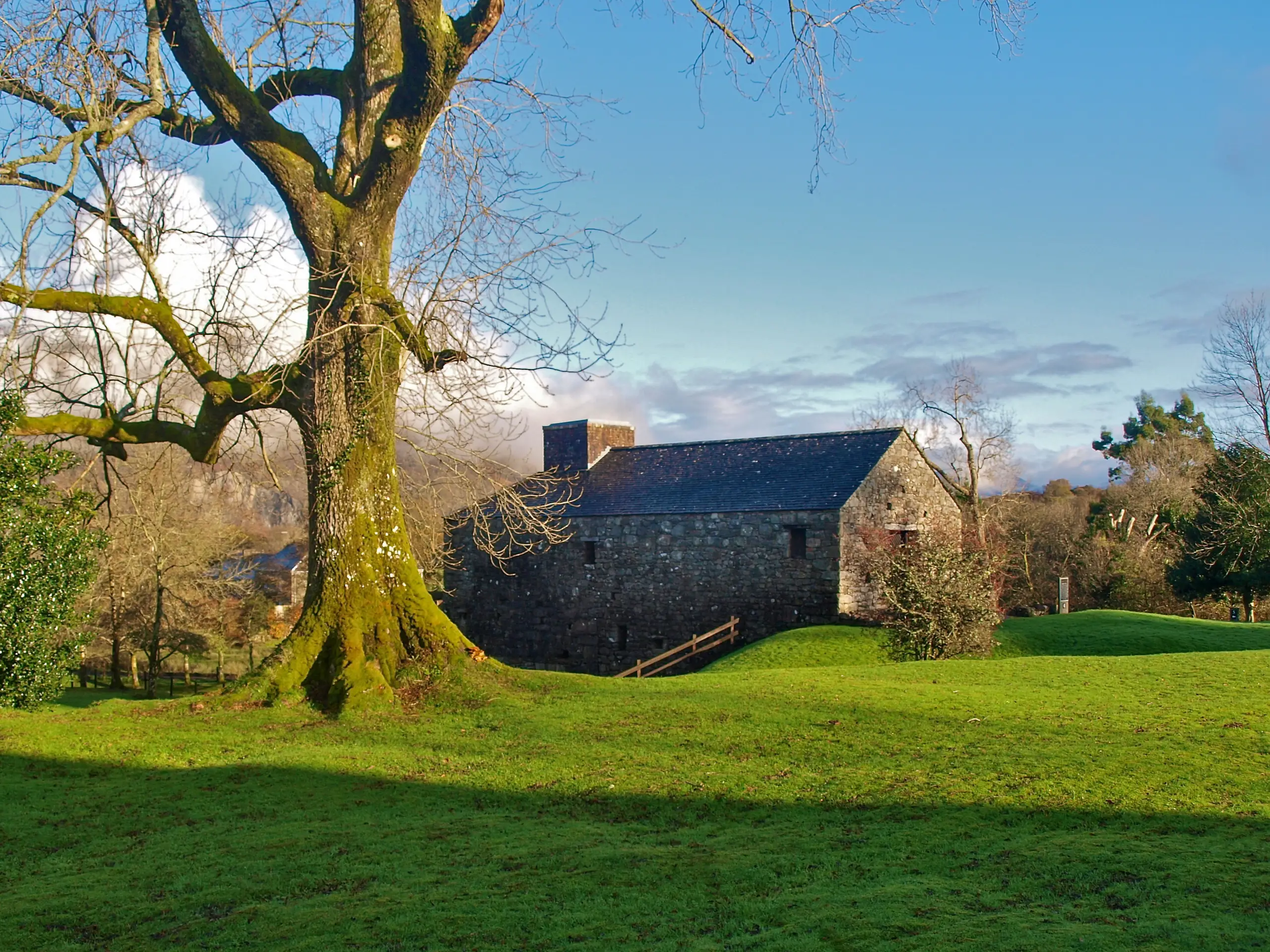
Bonawe Iron Furnace is nearby. It is of considerable historical interest, has been restored, and is looked after by Historic Environment Scotland. It had a charcoal-fired blast-furnace built in 1753, and it carried on until 1876, making mostly pig iron. The canon balls used by Nelson's navy in the Battle of Trafalgar were made here. Indeed, what is said to be the first monument to the battle and Nelson's death is a 'converted' standing stone in Taynuilt, the nearby village. The charcoal for smelting came from the woods around about, there was plenty of water for the waterwheel to run the bellows, and the iron ore was shipped up from Cumbria. Wandering around the old buildings, now peaceful and quiet, and the lumpy ground which must be covering more ruins and slag heaps, it is difficult to imagine that this was once a hive of activity — lots of very sweaty men working very hard probably. Apparently 600 of them, and others around in the woods as charcoal burners. 'Pevsner' aptly remarks on the "monumental quietness" of the buildings, "more ecclesiastical than industrial" (The Buildings of Scotland, Argyll and Bute. Frank Arneil Walker, Penguin Books, London, 1992). It is all very well signed and certainly worth wandering around. Kelly's quay is the long turf-topped pier which was built for the ships to bring in the raw materials, and take out the pig iron.And the canon balls.
Taynuilt itself is a bit of a walk, about 20 minutes or more, but there is a good general store, an excellent butcher, a post office, and the well-regarded Taynuilt Inn which burned down but was reconstructed in 2025. But in truth I don't see a lot of point in making the effort unless you really need provisions. There is also a 9-hole golf course not far from the shore.