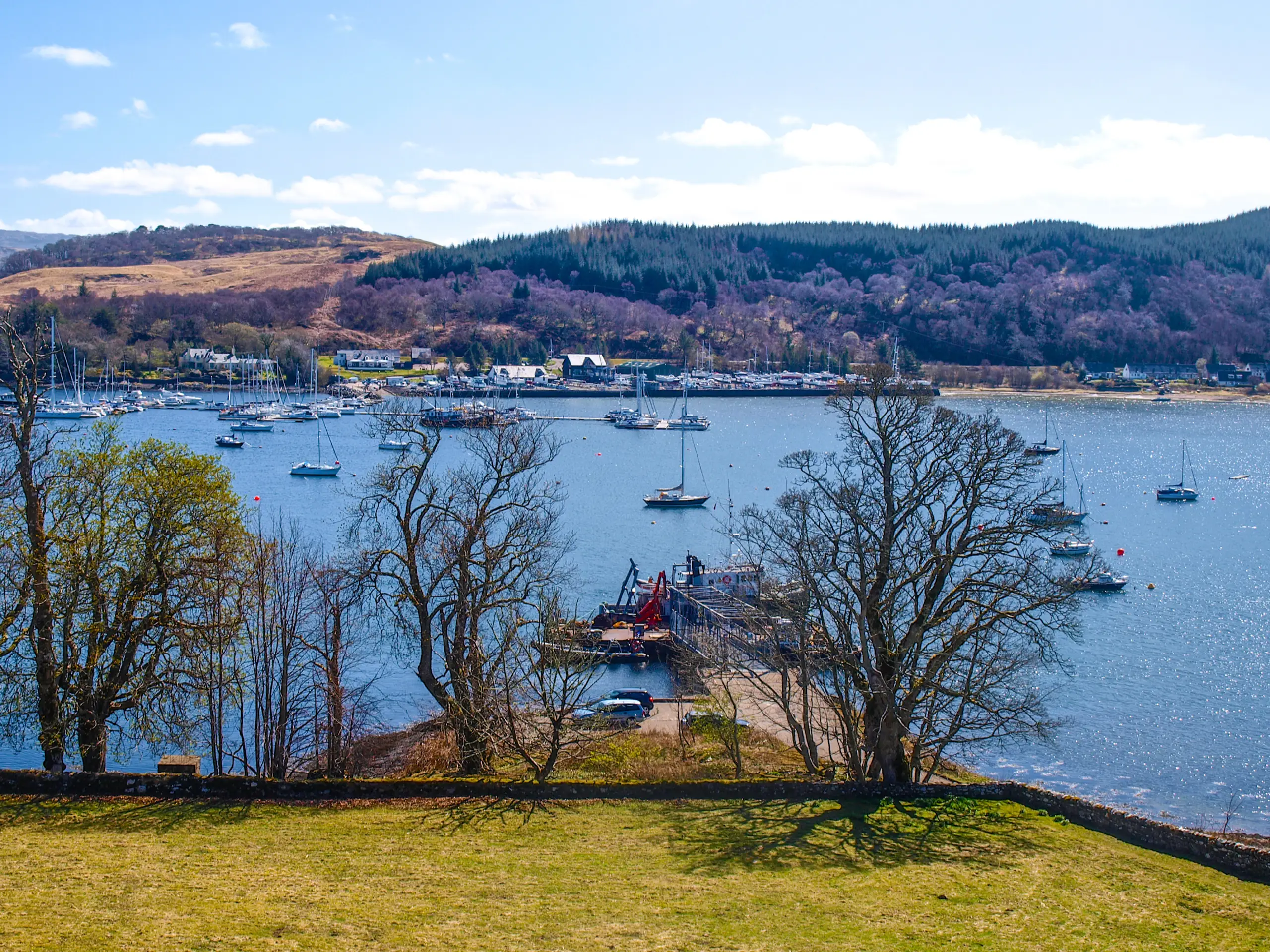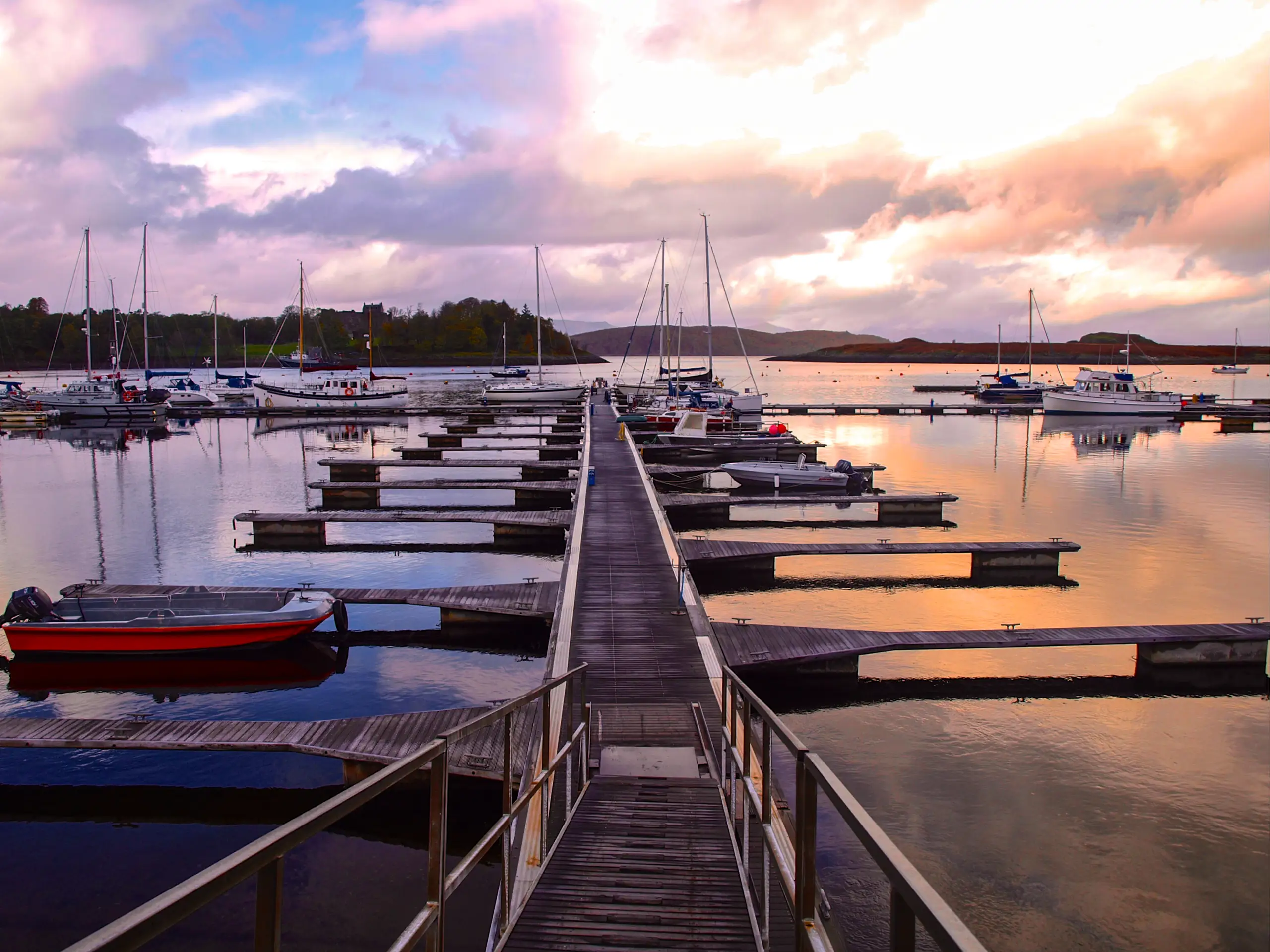
We have kept our boat here for more than 30 years, not because it is of huge interest to the cruising yachtsman, but because it is the closest place to Edinburgh to keep a boat on the West Coast (and you can get here by train as well as by car). What is more, it is quick and easy to get in and out with no tidal problems — turn right for Lismore and Loch Linnhe, straight ahead for the Sound of Mull, turn left for the Firth of Lorne. But don't try and enter under sail unless there is a reasonable wind or you have the engine on, because the wind dies at the entrance and there is more often than not a strong tide against you.
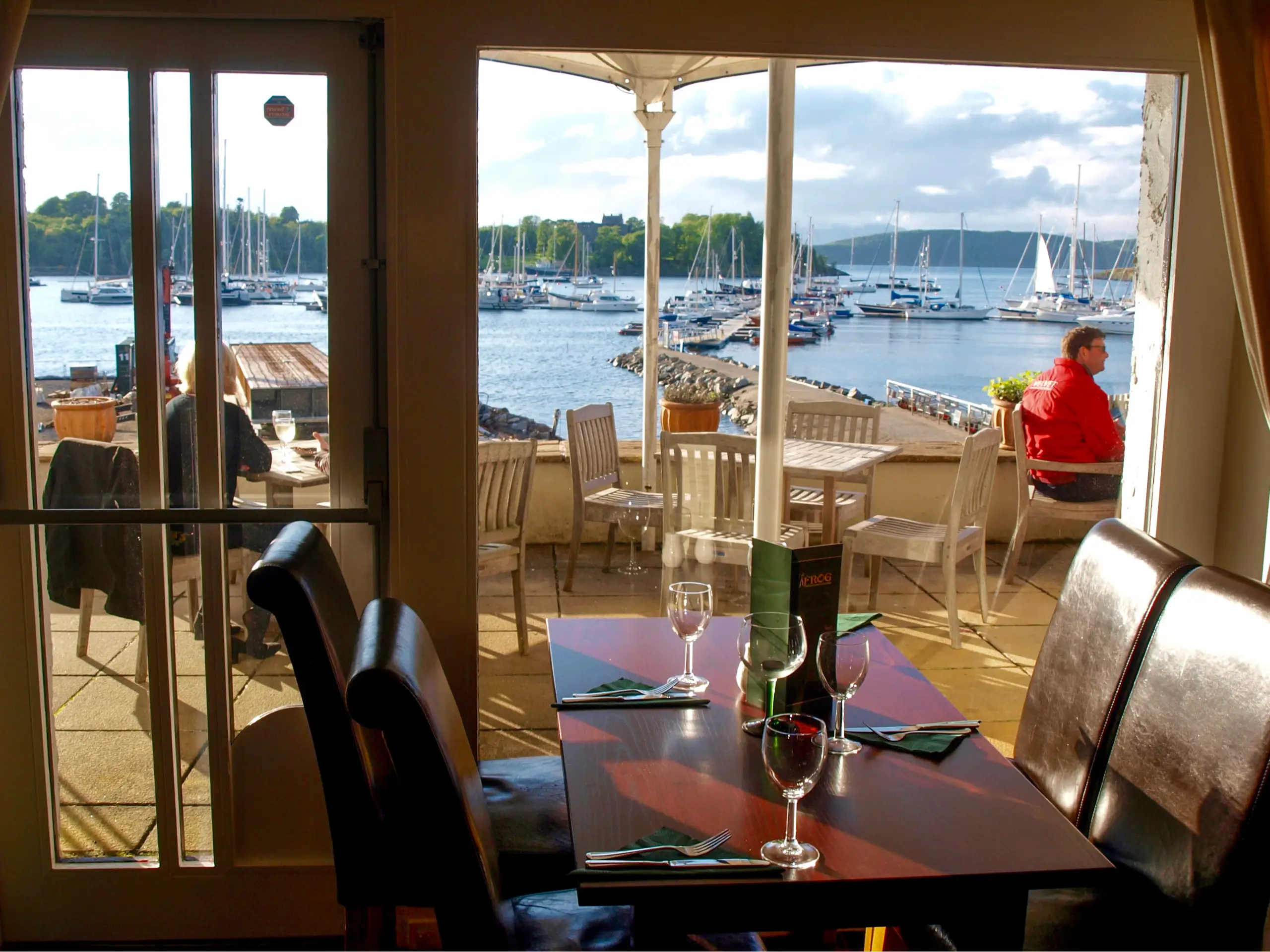
However, for the visitor there are certainly some pluses. First, it is a convenient place to change crew who can get here by train, bus, car, or even private plane to Oban airport (a rather grand name for a mere airstrip at the mouth of Loch Etive in North Connel). But, from 2017, the North Pier pontoons at Oban may be more convenient for crew changes. Second, there is a bar, with real ale, and a restaurant serving pub grub which over the years has gone up and down in quality — The Wide Mouthed Frog — (ph 01631 561129). However, in 2026 new lease holders are taking over so let's hope they do a good job. The views across the bay from your dinning table are great, and they have rooms too if any of your crew want to sleep in a proper bed for a night. Third, you can stock up with anything you need in Oban, just a ten-minute taxi drive away. Or walk by the path over the cliffs via Dunbeg, the cycle track and Ganavan Bay through very pretty oak and birch woodland. It takes a bit over an hour. Fourth, Alba Sailing, a charter company, has a good selection of chandlery, and is very helpful (ph 01631 565630). Finally, the marina should be able to help you out with water, fuel, electricity and repairs (ph 01631 566555). The one negative is the sound of the traffic on the main road, but even this does not drown out the seductive cooing of the eider ducks in the spring, and certainly not the oystercatchers at any time of the year.
In 2010 a very pretty garden centre called Poppies opened just next to the marina (in the green shed north of the big house). It does excellent café-style food (great meringues, the best in Scotland) but sadly it is not open in the evenings. Breakfast from 0830. Unfortunately you do have to walk round to it by the main road with no pavement, but perhaps better take the dinghy straight there (ph 01631 565718). It is buzzing which goes to show what enthusiastic people can do with this sort of establishment. Not surprisingly it is winning awards.
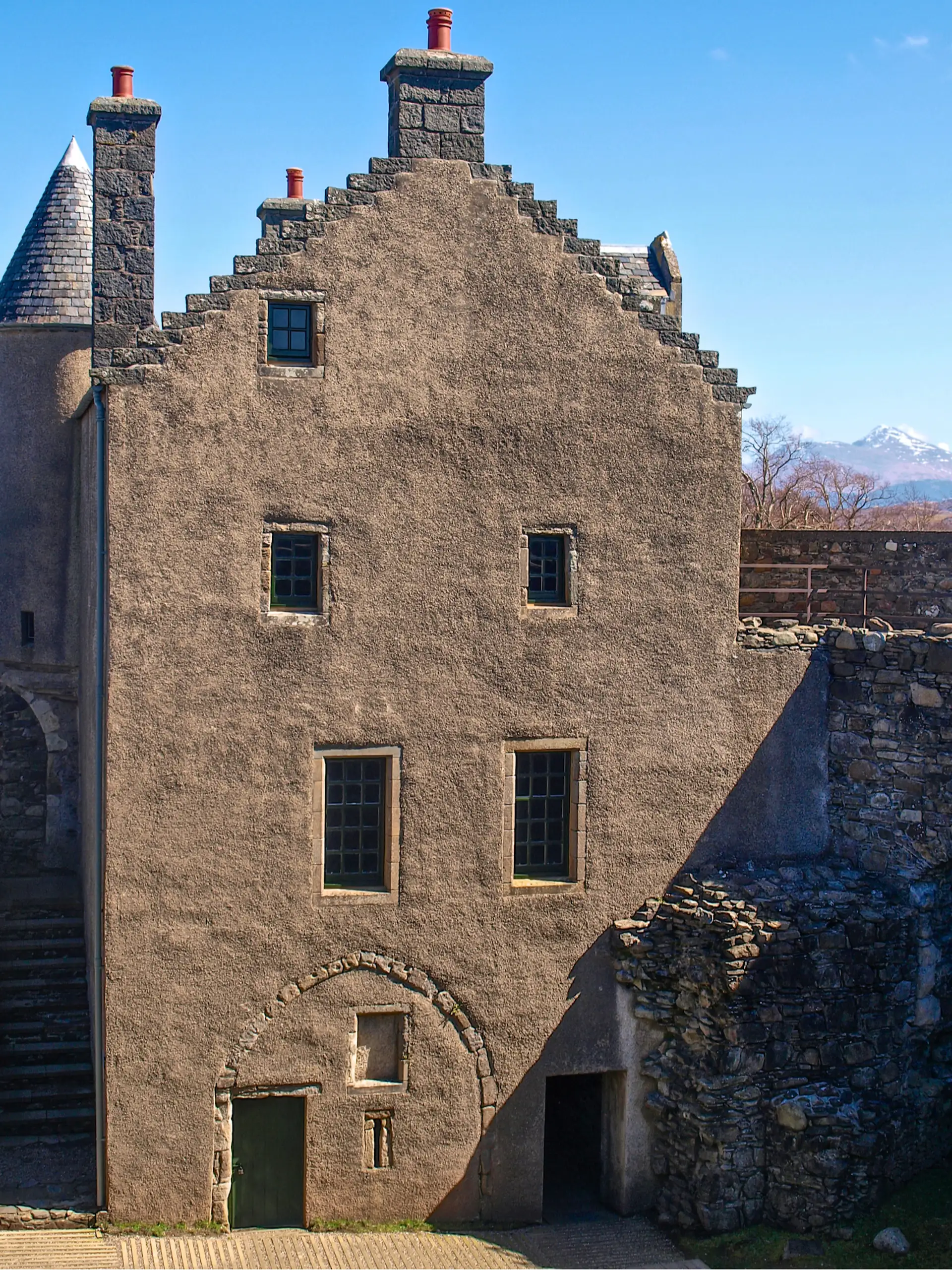
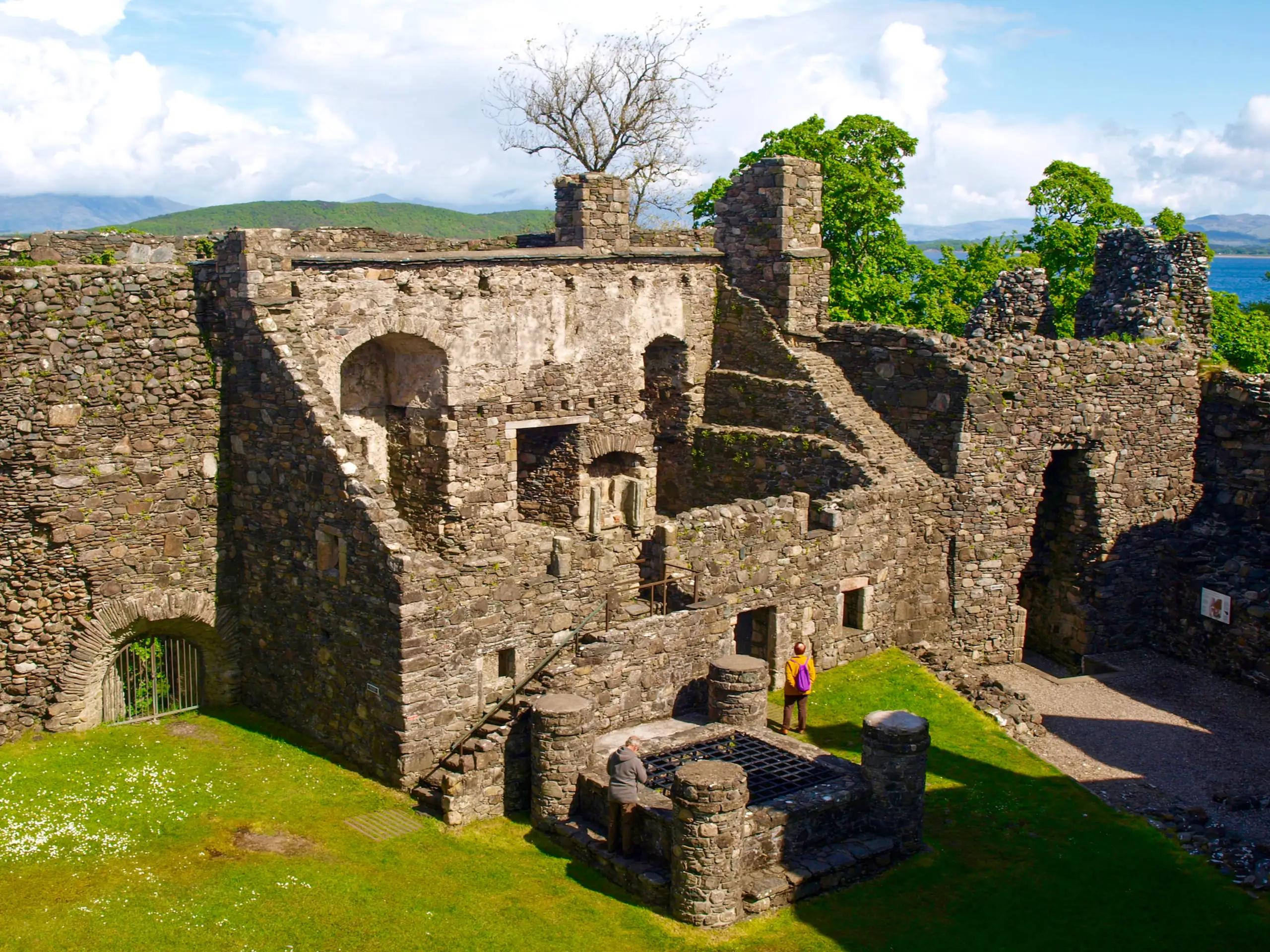
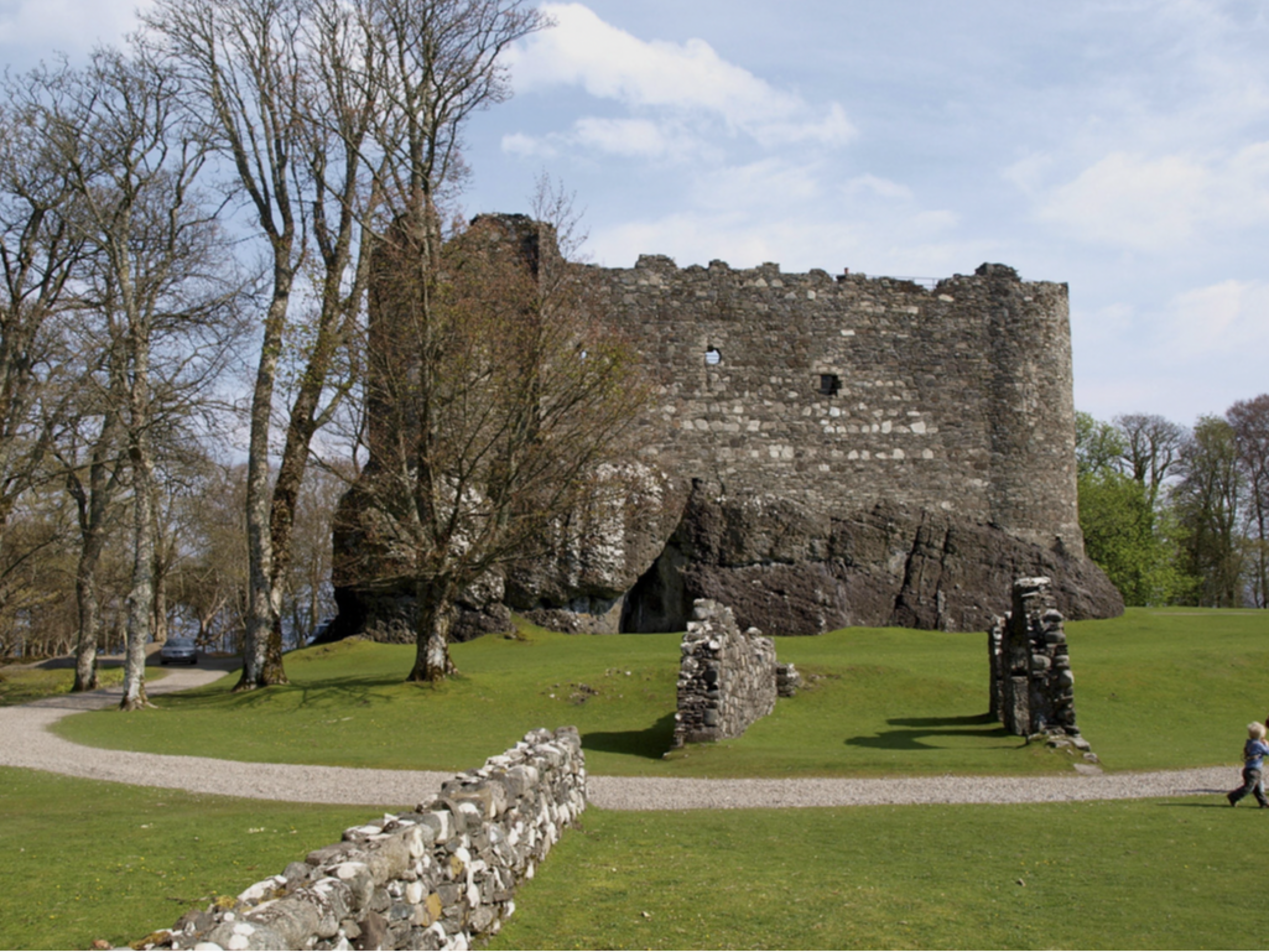
However, what people are in danger of missing is on the other side of the bay. Dunstaffnage Castle, originally another MacDougall stronghold but owned by the Duke of Argyll since the late 15th century. It is a small but splendid semi-ruin, its massive and almost complete stone walls seeming to grow straight out of a huge plug of volcanic rock, as John Knox described in the late 18th century: "The castle is built upon a rock, at the mouth of Loch Etive, whose waters expand within, to a beautiful bay where ships may safely ride in all weather" (A Tour through the Highlands of Scotland and the Hebride Isles in 1786. John Knox, James Thin, Edinburgh, 1975). It is surely worth a visit, especially for the views from the castle walls overlooking the bay — 'a most splendid prospect' according to Walter Scott in 1814 (The Voyage of the Pharos, Walter Scott’s Cruise Around Scotland in 1814. Walter Scott, Scottish Library Association, Hamilton, 1998 ). Also plenty of latrine chutes to amuse the children, and they will enjoy playing hide and seek too. It was begun in the 13th century and, as usual, various bits have been added and fallen down over the centuries until it was more or less abandoned after a fire in 1810. Flora MacDonald was imprisoned here for helping Bonnie Prince Charlie to escape after the disastrous 1745 Jacobite rebellion.
The castle is now lovingly looked after by Historic Environment Scotland. The 16th century crow-stepped harled house on the top is still owned by the hereditary keeper, the so-called Captain of Dunstaffnage, who lives near by. He had allowed the castle to fall nearly to pieces, perhaps because of lack of cash, until in 2012 Historic Environment Scotland gained some sort of control, nicely restored it, and in 2014 opened it to the public. A small triumph. At the moment it is empty but the house is a useful place to shelter from the rain. In the future there are plans to mount exhibitions here. Personally I reckon it would be a great place for a party, but I doubt if the Captain would allow it. Above the ticket office there is a room with a nice model of what the castle might have looked like in its prime.
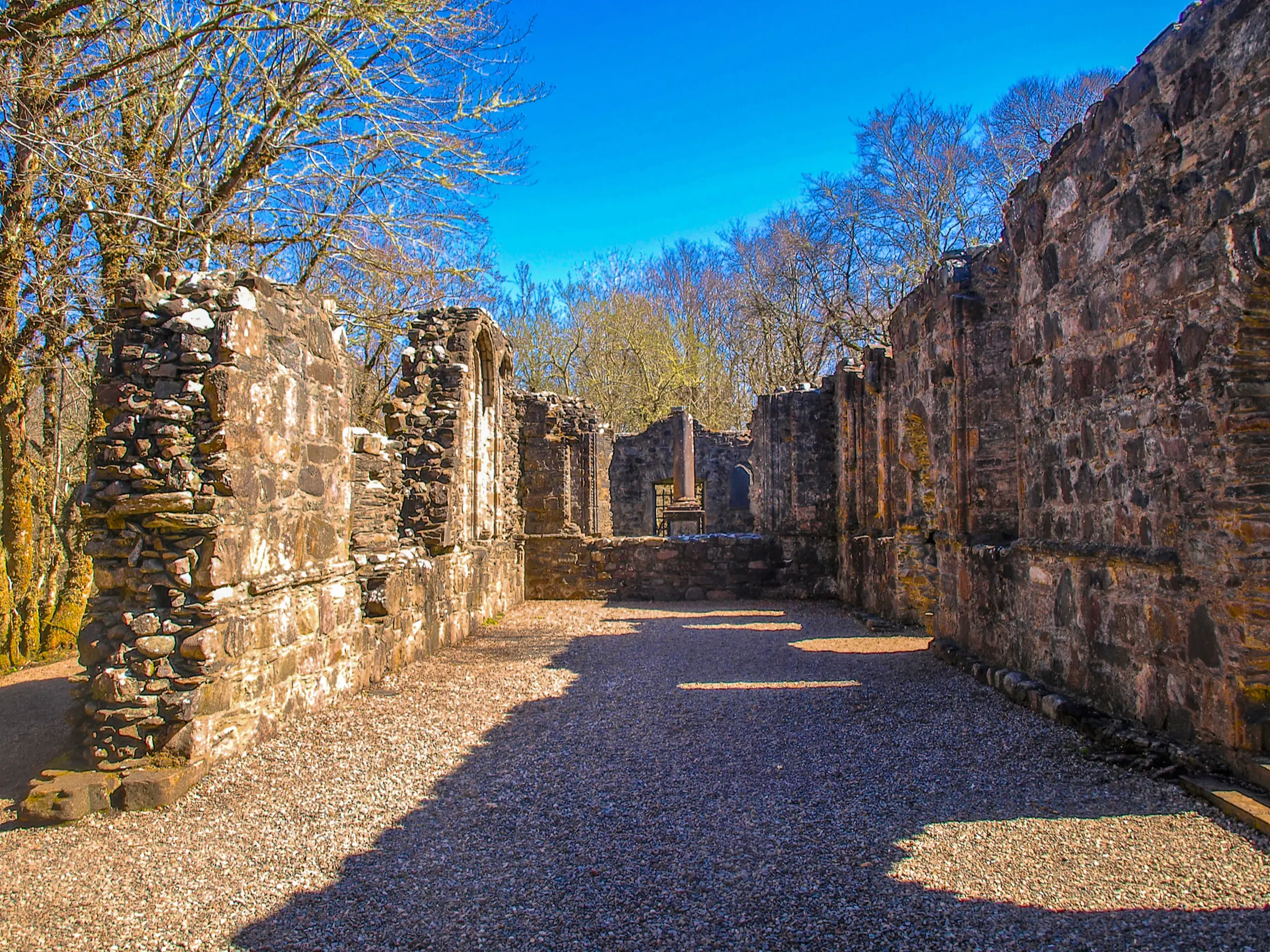
Very near by, in the woods, is the now roofless 13th century Dunstaffnage Chapel which is also worth a visit. Bits of gothic architecture remain, but the burial aisle to the east is an 18th century addition for the Campbells of Dunstaffnage. All this is surrounded by delightful deciduous woodland with loads of bluebells in the spring, and rabbits anytime. A wander around here on a warm sunny day is a definite highlight of any Hebridean tour — views of the bay with Connel Bridge and Ben Cruachan in one direction, and the Firth of Lorne in the other.
The not completely unattractive modern building in the corner of the bay contains the Scottish Association for Marine Sciences (SAMS), Scotland's only fundamental marine research institution. For the many scuba divers keen to explore the wrecks and underwater scenery, it has the advantage of the adjacent decompression sickness (the bends) treatment facility, hence the coming and going of rescue helicopters, although less often than in times past. Maybe the divers are getting safer, or have moved off to warmer waters. At least they were until 2019 when 37 divers were treated. However, in 2024 this NHS facility was closed so patients now have to be taken to Aberdeen which, being so far away, certainly compromises their chance of recovery. The hyperbaric facility is I think still open, but you now have to pay for being decompressed. Sounds a muddle to me.
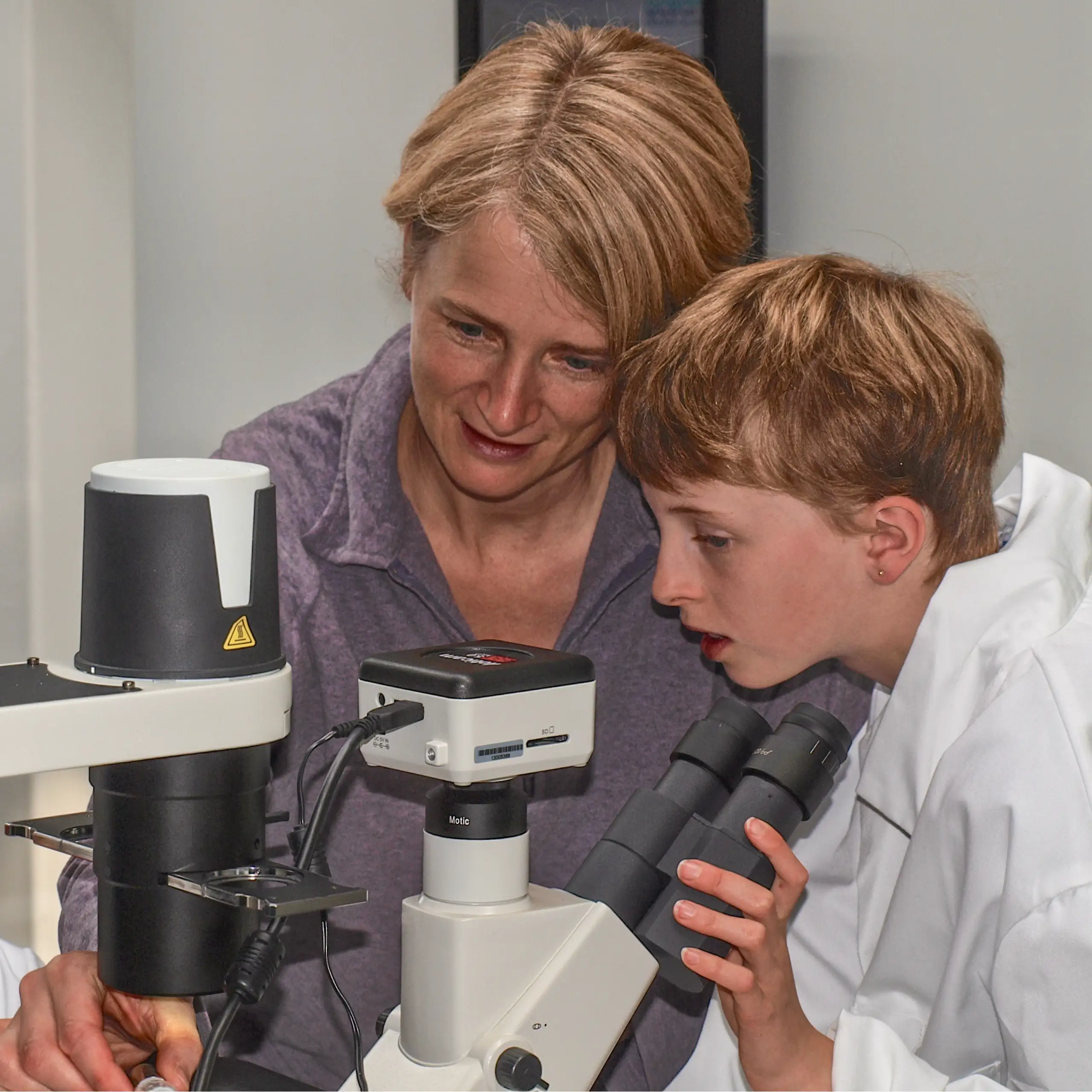
The Ocean Explorer Centre, an outreach facility of SAMS opened in 2013, a marine visitor centre definitely worth a visit, and it's free. It may be small but it has plenty of stuff to ponder over, and good for children too. You can play at being a marine scientist by donning a white coat and then peering down a microscope at various algae, examine the mapping of the seabed of the Firth of Lorne, look at pictures from the under-water camera in the bay, the three dimensional globe, and the moving picture showing the ocean currents of the world. All good interesting stuff. And for coffee and a bun there is the small Beach Café, which seems to keep changing hands rather often. This is all part of the University of the Highlands and Islands. Only 20-25 undergraduates a year, so terrific contact with the scientific and teaching staff. Very unlike some very well-known universities where classes of 200-300 are lectured at.