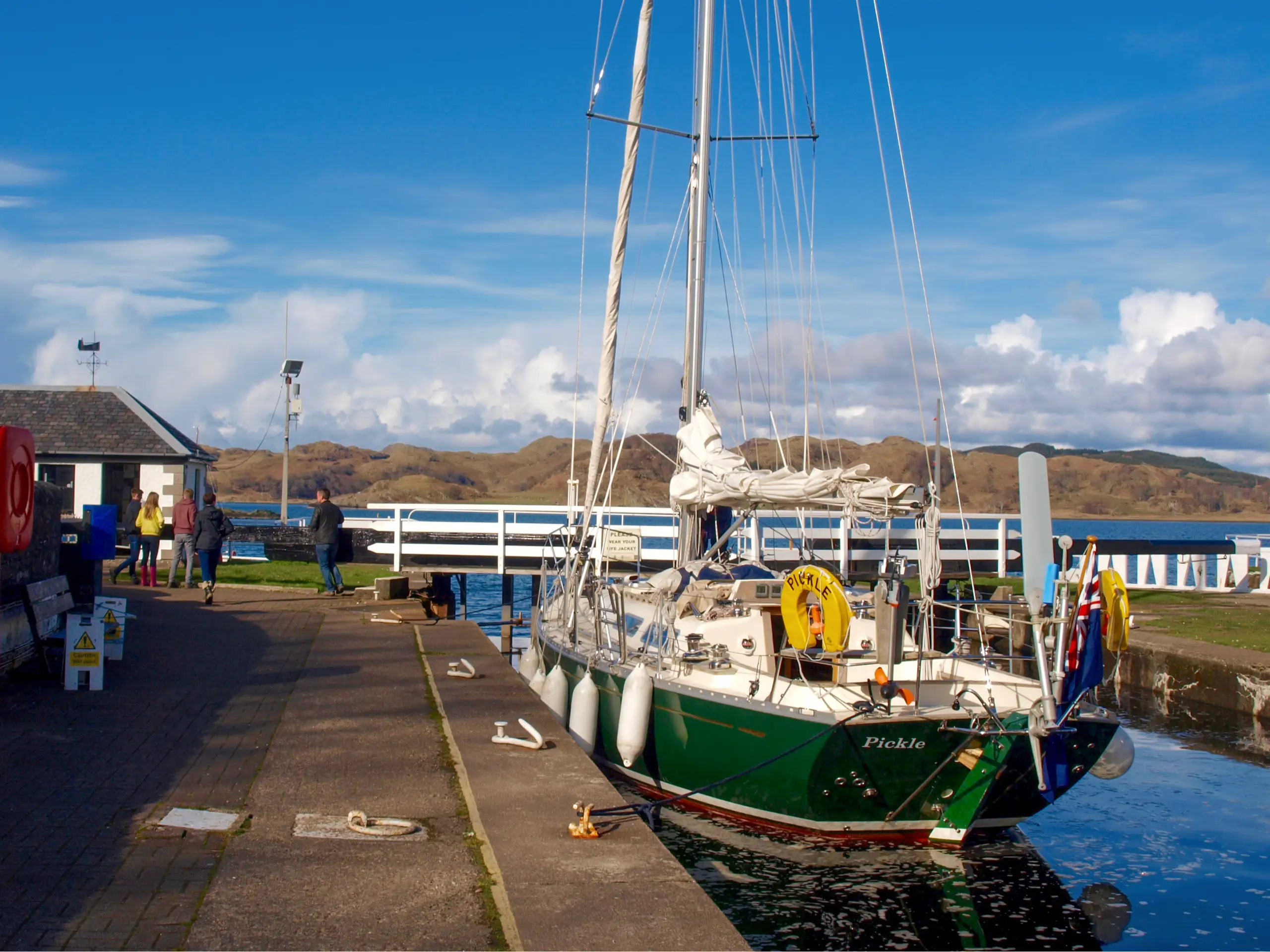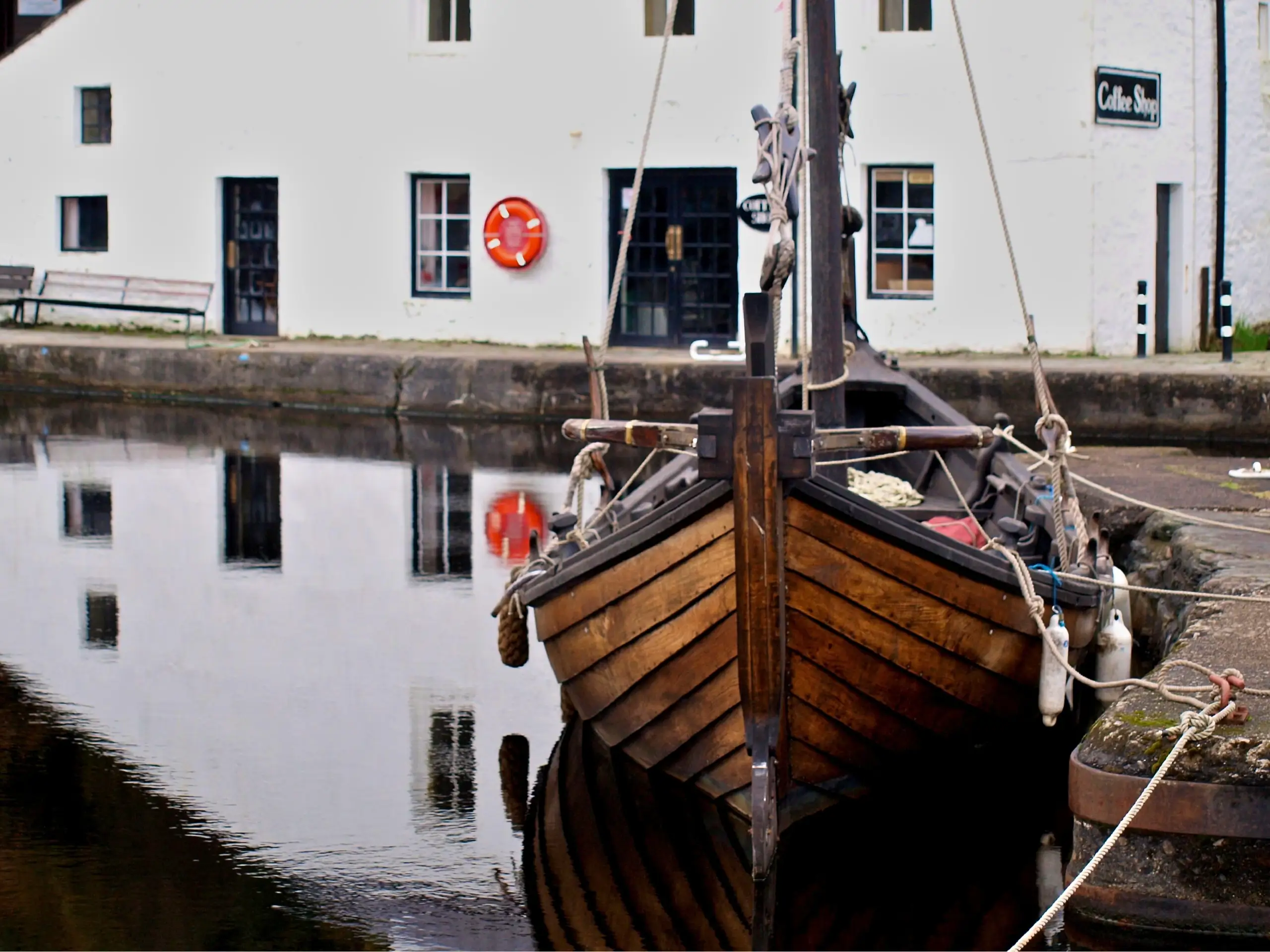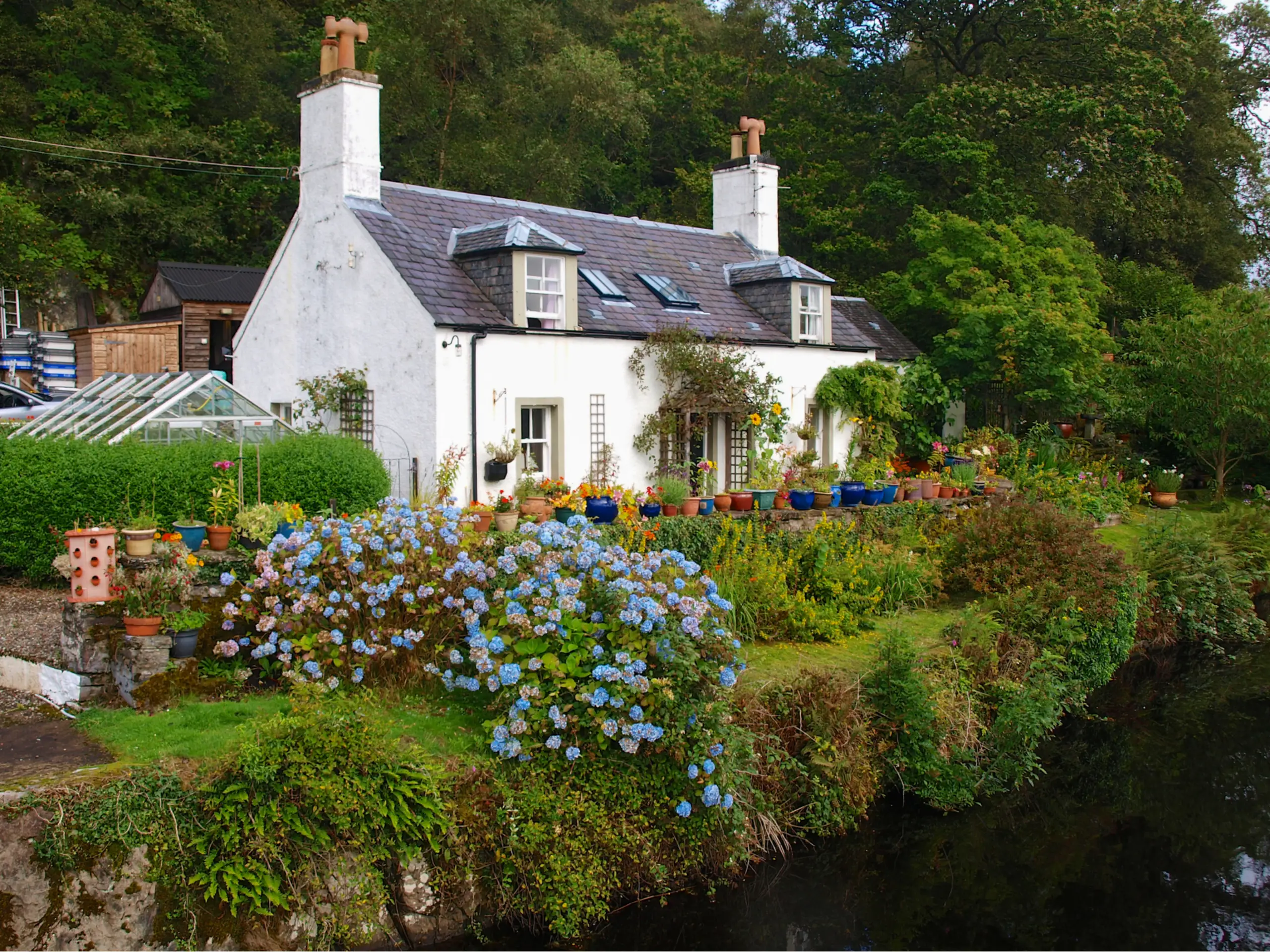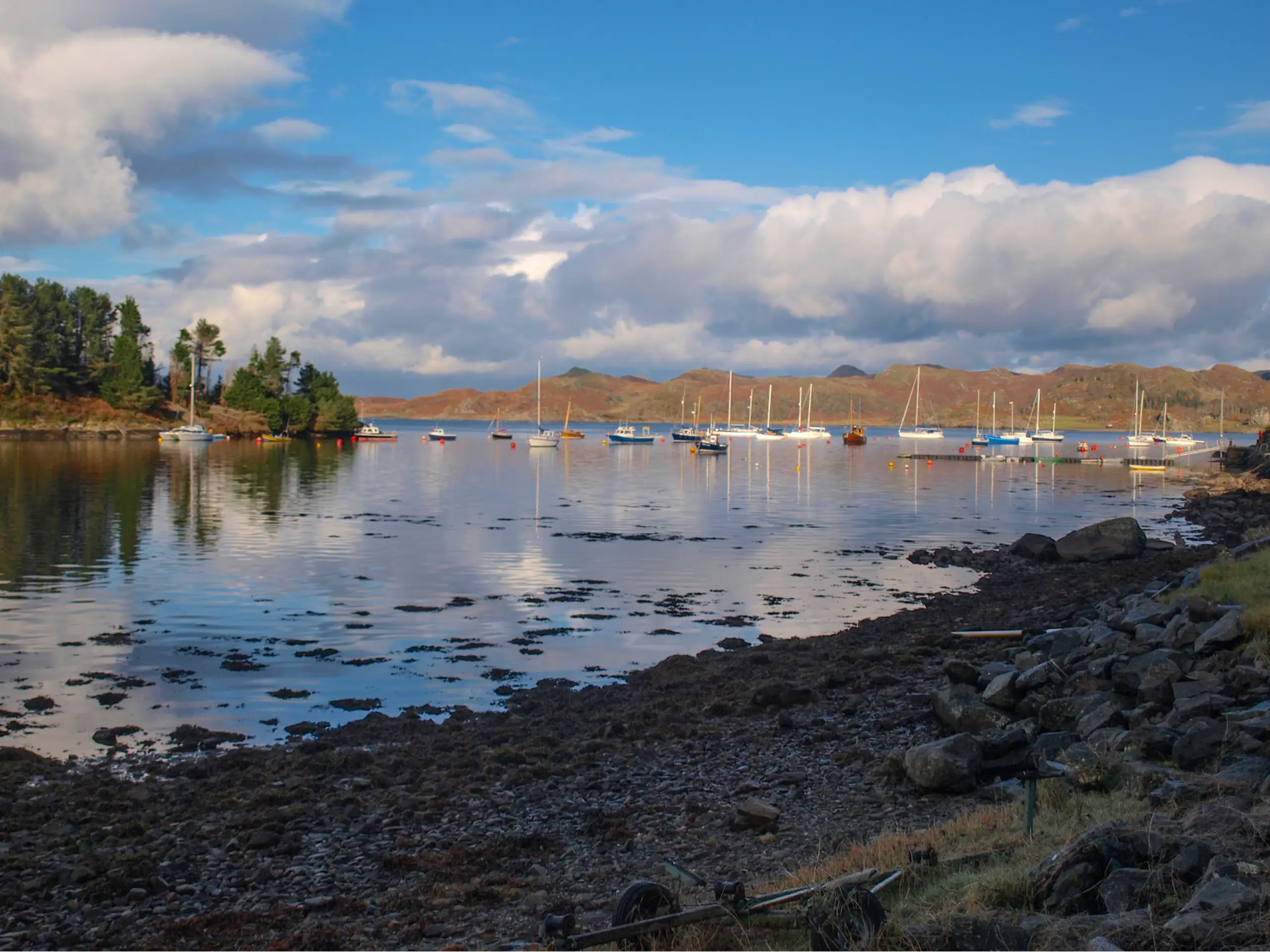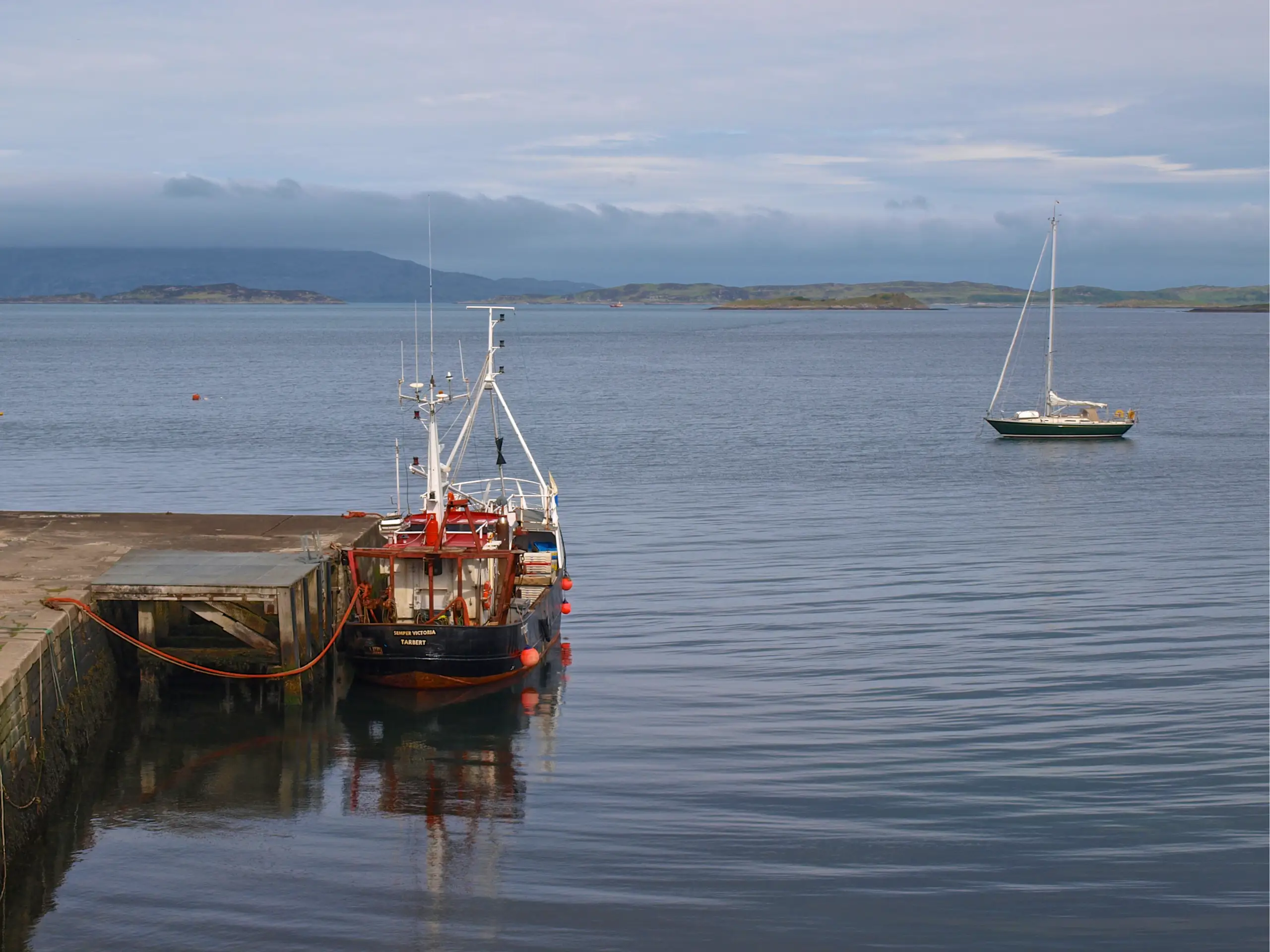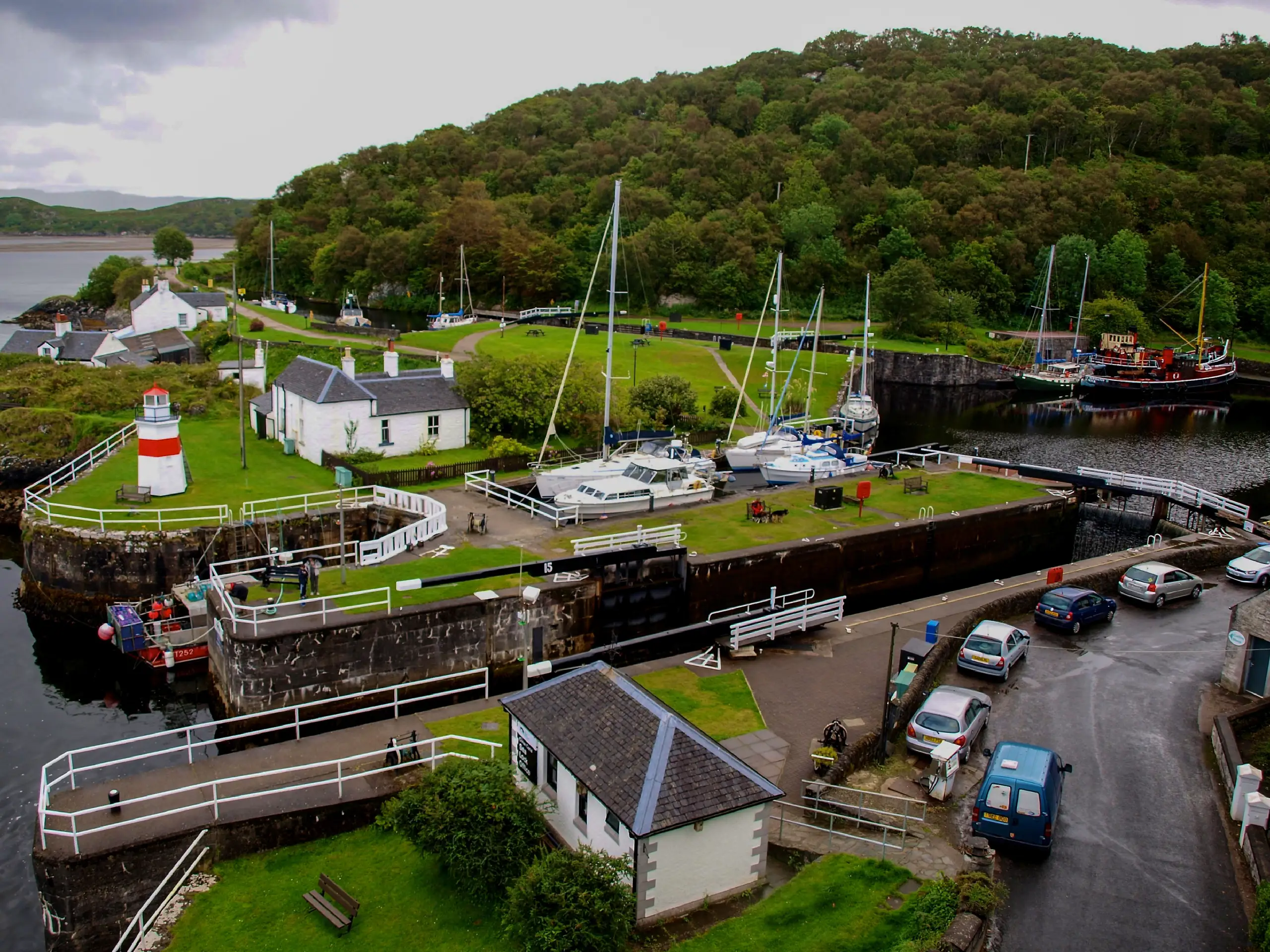
Even the dire architecture and roof-top excrescences of the several times rebuilt Crinan Hotel cannot detract from the charm of the canal basin (but beware midges under the trees). As ever 'Pevsner' gets it bang on: "A unique intimate place of green grass, white walls and black lock gates" (The Buildings of Scotland, Argyll and Bute. Frank Arneil Walker, Penguin Books, London, 1992). There always seems to be something going on at Crinan, at least in the summer, and you can join in with the main occupation which is to watch the boats making a cock-up of getting in and out of the locks, or being hurled around the sea lock as the water is allowed in. This is a great place to lounge, have an ice cream, and generally hang out. The newish toilets are a welcome addition.
Lock 16, the small café in the early 19th-century post office, is nice but pricey. Did my eyes or memory let me down, were the cappuccinos really £3.50 back in 2014? Yes they were, I re-checked in 2016, Strangely they are much more reasonable now — a mere £4, and tasty too. If you really want to spend more money, then dine in the Westward on the ground floor of the Crinan Hotel (ph 01546 830261). It's good food, but maybe not so good to stop you feeling uncomfortable as a scruffy yachtie. Costing rather less, the hotel's cosy Seafood Bar does excellent fish and chips for £17.50 (2025), and other more expensive stuff (linen napkins are nice). Good ambience and very pleasant staff. The public bar next door is small and cosy, but no real ale last time I asked.
The hotel — and indeed the cafe — is very keen on hanging and encouraging original art, not surprising as Frances MacDonald, a well known Scottish painter, is the widow of Nick Ryan. They had run the hotel since 1970, and now she carries on running it, I think with her son Rory. She has also made something of a secret garden tucked away on the hill just behind the hotel, open to the public.
I have never had to call on the services of the Crinan boatyard, or their chandlery, but they are I believe very good, and have visitor moorings if you can't be bothered to anchor off the hotel where there is a convenient slipway (ph 01546 830232).
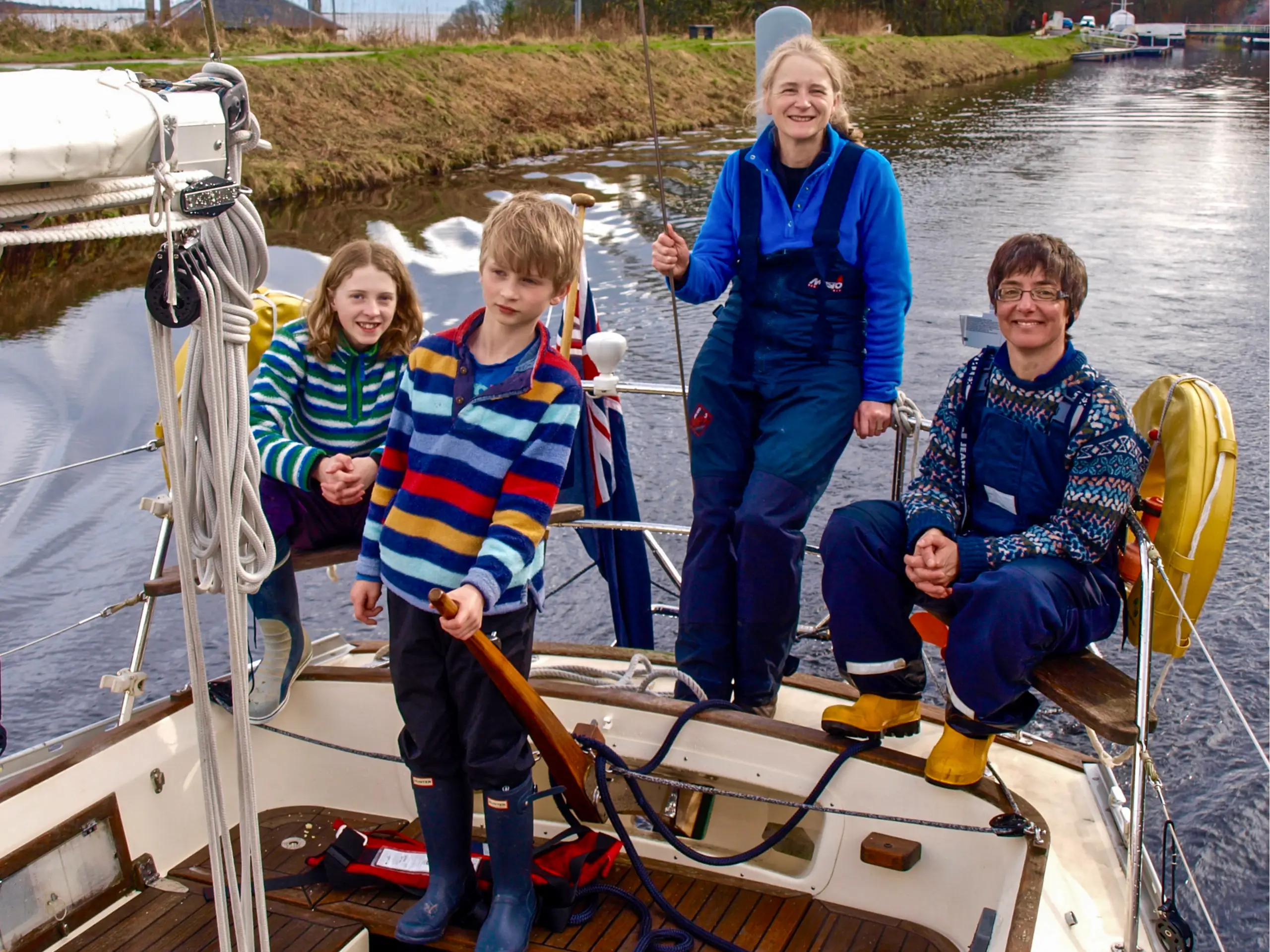
For the modestly energetic, a walk along the canal towpath is a pleasure at any time of the year, from primroses in the spring to the colours of autumn The 200+ year old canal is of course a treat all of its own, built to connect the Clyde with the West Coast without ships having to round the Mull of Kintyre. At first it was used by coastal vessels, fishing boats and colliers, then rich tourists travelling by steamer from Glasgow to the West Coast and the 'sublime' wonders of Staffa. Now it is almost entirely for the leisure trade, the transiting steamers have long gone. The anonymous old quote "Britain's most beautiful shortcut" sums it up just right. For those who don't like going to sea at all, follow Sandi Toksvig who, passing through the Crinan Canal while being sailed round Britain, decided she liked "sailing in places where you have land on either side of the boat. You can choose to sail or walk or ride a bike as you pass some of the most invigorating scenery in the world" (Island Race, An Improbable Voyage Round the Coast of Britain. John McCarthy and Sandi Toksvig, BBC Books, London, 1995).
The early sailors had no engines of course, so towed their boat with or without the help of a 'hired man', or used a horse like the Rev. C Wilkinson in 1892: "A horse covered with more or less skin tows you through at trotting speed for half-a-sovereign" (By Ocean, Firth and Channel; Amateur Cruising on the West Coast of Scotland and North of Ireland. ‘Diagonal White’, Printed by A Mayne & Boyd, Belfast, 1894). The problem then was stopping in the locks, particularly if the wind was from behind. The technique was to throw a stern rope round a hook on or by the lock gate as you went in (the hooks are mostly still there — and could still be used by those in too much of a hurry!).
If you walk along the towpath from the Crinan basin to the first bridge, cross over and turn left you soon come to a way-marked track up the hill to the right. It leads to a charming trail constructed by the Woodland Trust who own the land. They are restoring many broadleaf woods in the UK, here a remnant of Scotland's temperate rain forest. The walk takes you back to the canal basin in an hour or so, allowing for dawdling along the way, sitting on rustic benches to admire the view and all of that. Or do the walk the other way round, from the canal basin.
Another walk is from Crinan Harbour, where the road ends, towards Ardnoe Point where in 1km you should find the gravestone of a 19th century skipper who died of cholera. Do not take the main path up the hill but the narrow, boggy, rough and generally rubbish and poorly marked path through the woods along the shoreline. The gravestone is very hidden in the undergrowth and in truth I have not been able to find it! I rather hoped I would somehow trip over it amongst all the tree roots, in the same way as Rat and Mole found Badger's House in the Wild Wood in 'Wind in the Willows'. Possibly better to anchor in the bay if you can, rather than walk from the canal basin because there is too much road that way. And do what I didn't — use the OS map, and look for the ash tree over the gravestone at grid reference 773 945.
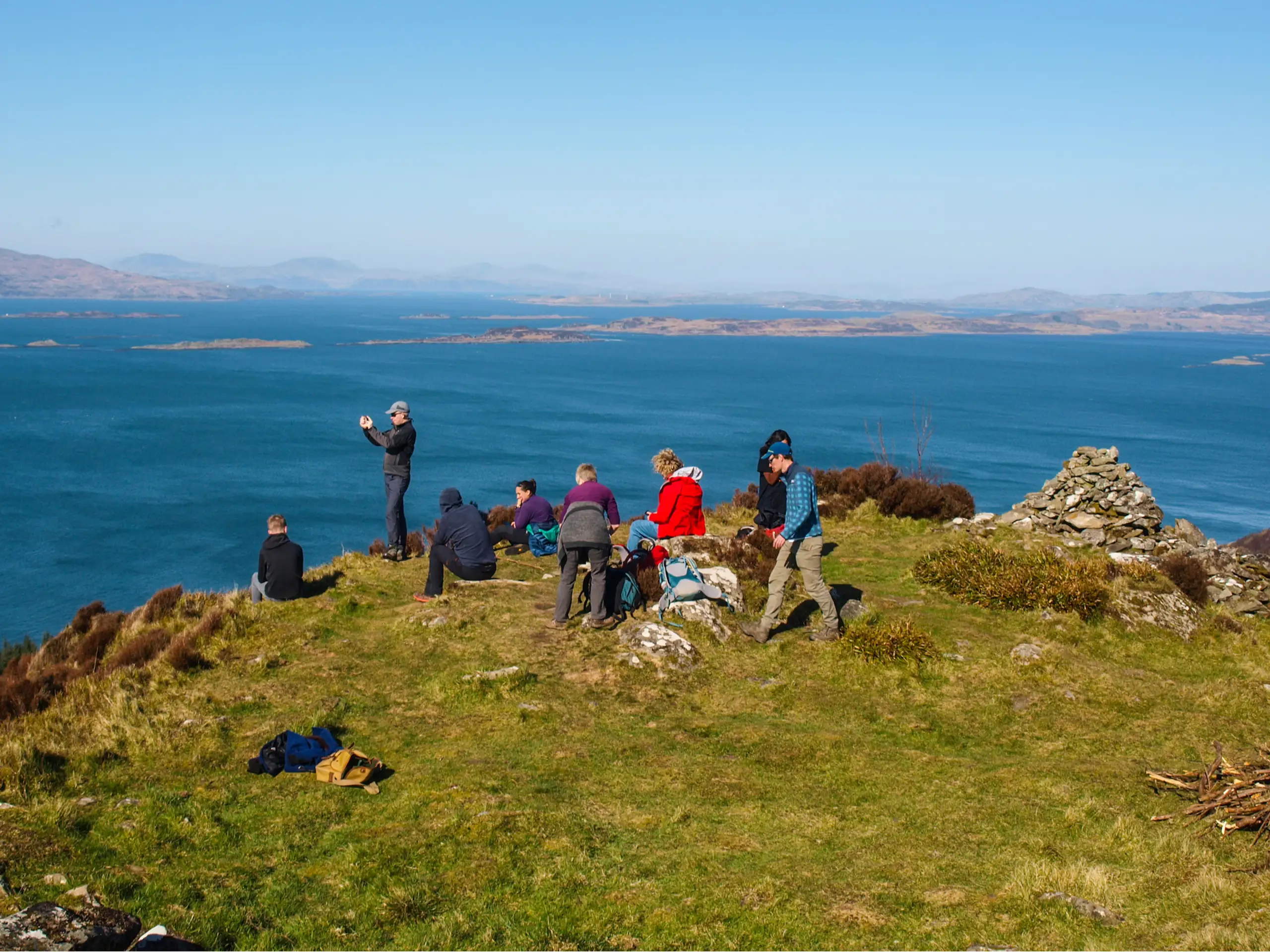
A longer walk of four miles, the so-called Crinan Trail, takes that uphill path I just mentioned. Follow the waymarks and you will eventually come to Castle Dounie, a ruined but still recognisable iron-age fortification, or dun, perched on top of a small hill. The views from there from way down Jura to the mountains on Mull and Ben Cruachan are truly stunning. On the way if you are wondering what the tall brick chimney is doing at the back of the houses in Crinan Harbour, it is part of a ruined 19th-century chemical factory where pyroligneous acid (what is that?) was distilled from birchwood.
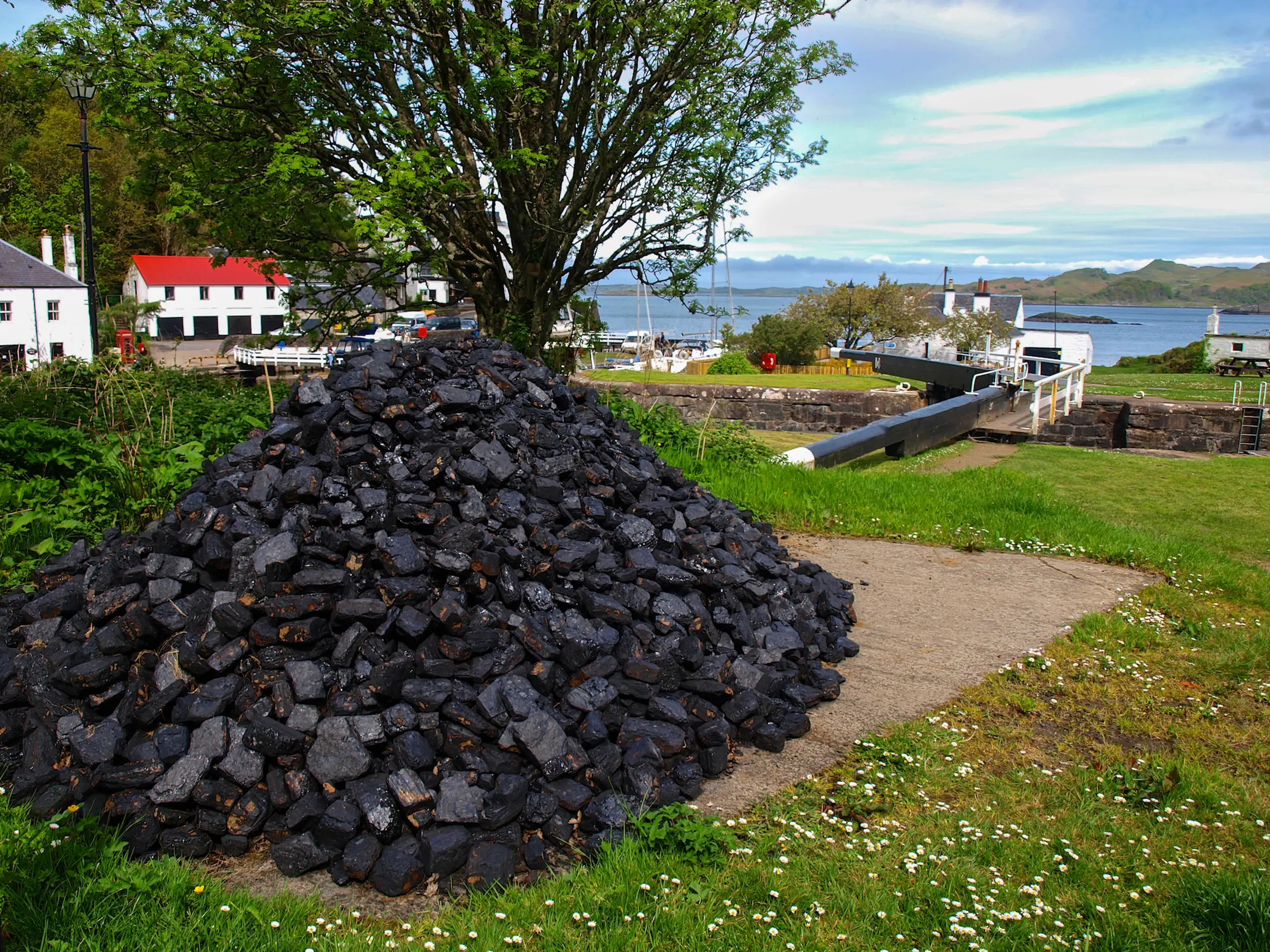
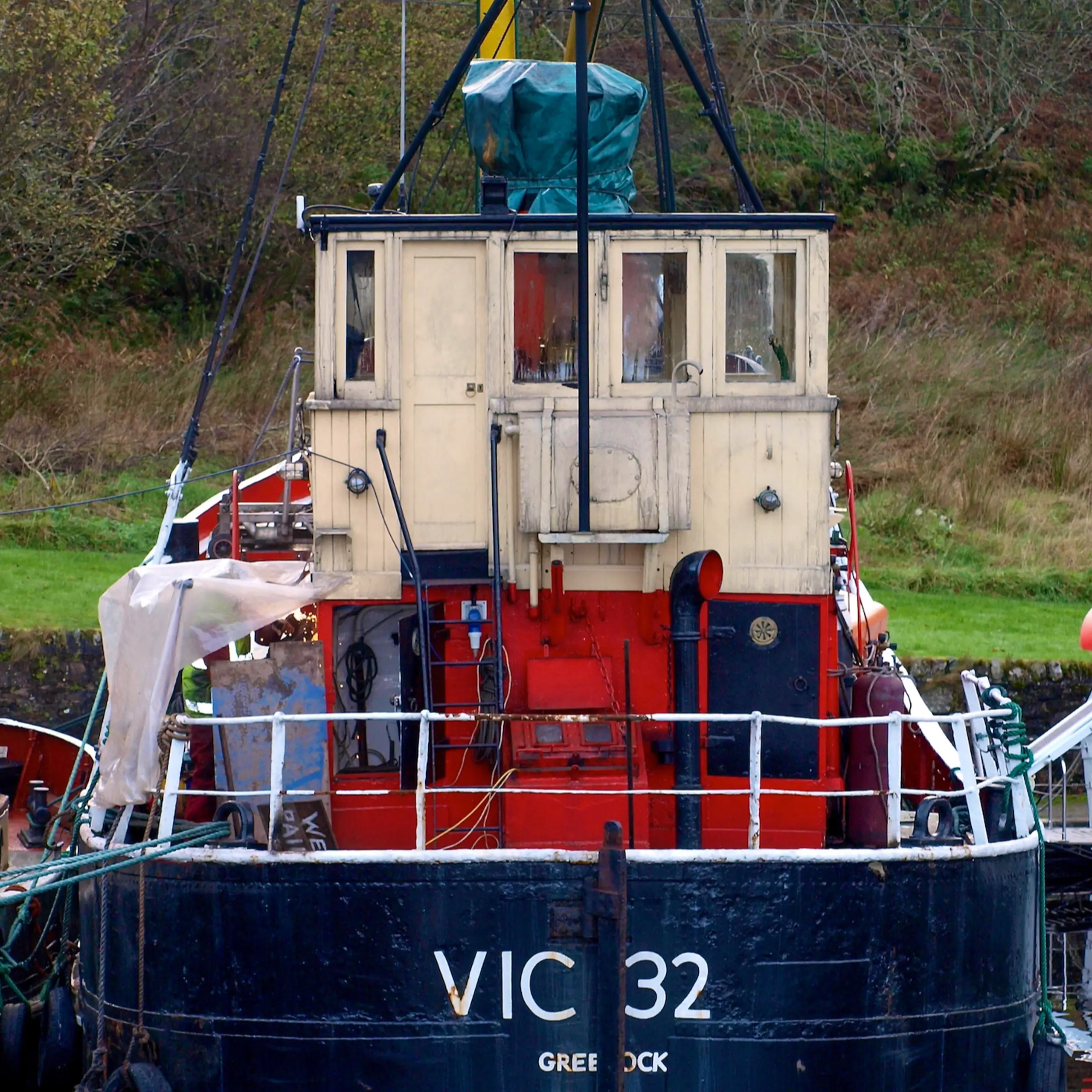
If she is not in the basin, you may have spotted her somewhere in the Firth of Lorne under a smudge — or cloud — of black smoke, the VIC 32, the last seagoing coal-fired Clyde 'Puffer'. She was built in Yorkshire in 1943 (same age as me!) and used in the war by the navy as one of the Victualling Inshore Craft (hence VIC) around Scotland. Keith Schellenberg, a former erratic owner of Eigg, got hold of her in the 1960s, then Nick and Rachel Walker bought her in 1975 and set about a complete restoration so they could use her to take passengers on scenic cruises around this part of Scotland. They eventually gave her to the Puffer Preservation Trust in 2002 so she could carry on where they left off. Long may she steam!
What to do if you find yourself stuck in Crinan on a wet, horrible and windy day, and have exhausted the local opportunities? West Coast Motors run the occasional bus to Lochgilphead, or you could summon a taxi, and there are then two good places to go. First, the Kilmartin Museum with its excellent café and gift shop which majors on the pretty significant archaeology around the local glen (there are many assumptions about 'rituals and ceremonies'). It reopened in 2023 after being splendidly extended and refurbished (you will need another bus to get there I'm afraid). The second, is to the Mid Argyll Community Pool (McPool) in Lochgilphead, opened back in 1996.
I am slightly surprised there is no plaque anywhere hereabouts to commemorate the shipwreck of the Comet. She was built on the Clyde in 1812 and provided the first commercially successful paddle steamboat service in Europe, initially between Glasgow, Greenock and Helensburgh, and later on the Glasgow to Fort William run through the Crinan Canal. But in December 1820 she didn't make it through the Dorus Mor (the big door) and was wrecked off Craignish Point, not a good time of year to be out and about at dusk with wind against tide in a snowstorm, and insufficient horsepower for her paddles. Fortunately all the crew survived the experience (there were no passengers). The ship itself split in two and was lost, despite efforts at salvage. Although her engine is presumably on the seabed somewhere, her earlier engine is now in the Science Museum in London.
Apparently one old Clyde skipper when he saw the Comet remarked:"Kneel down and thank God that you sail with the Almighty's own wind, and not with the devil's fire and brimstone like the spluttering thing there".