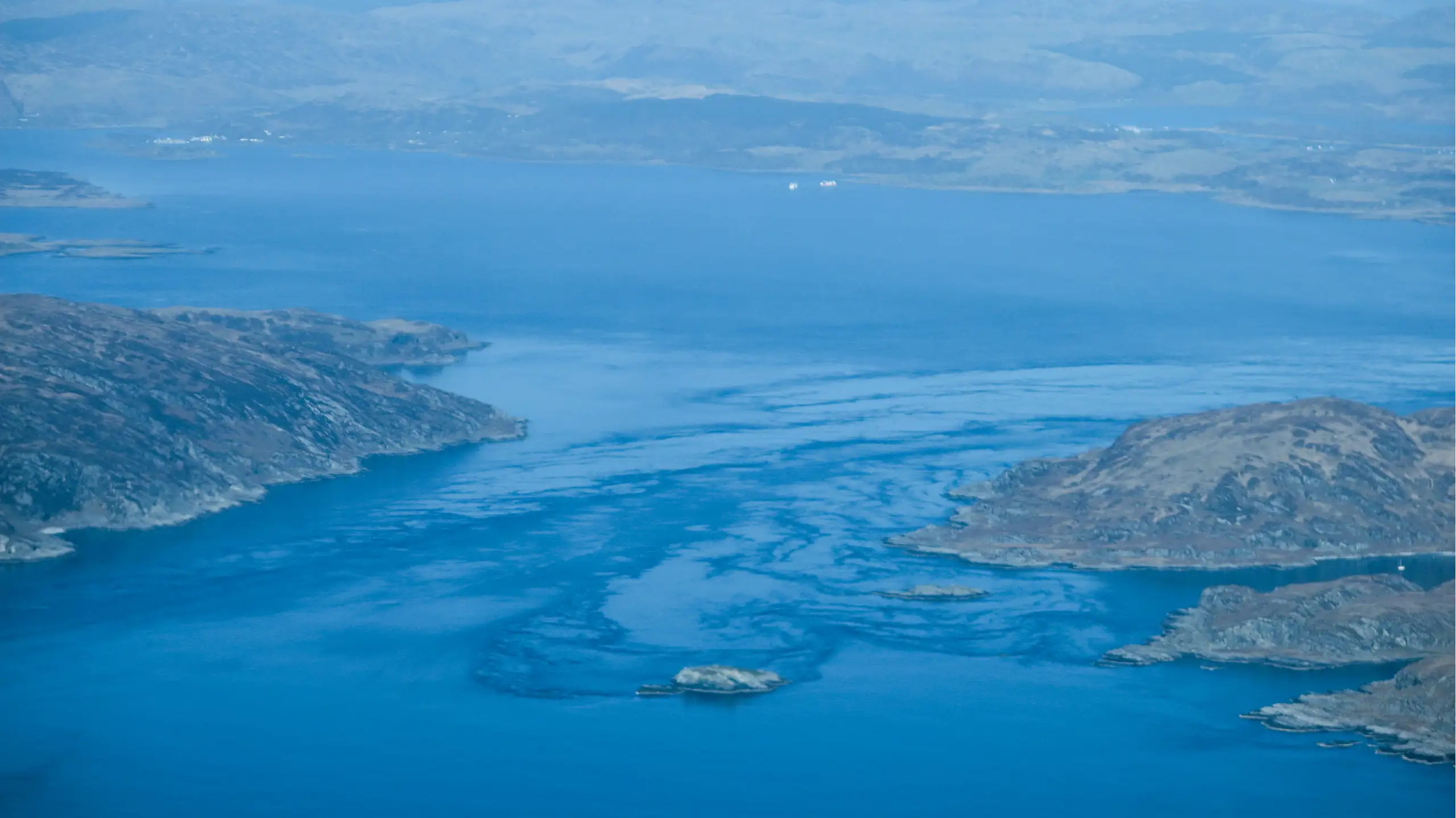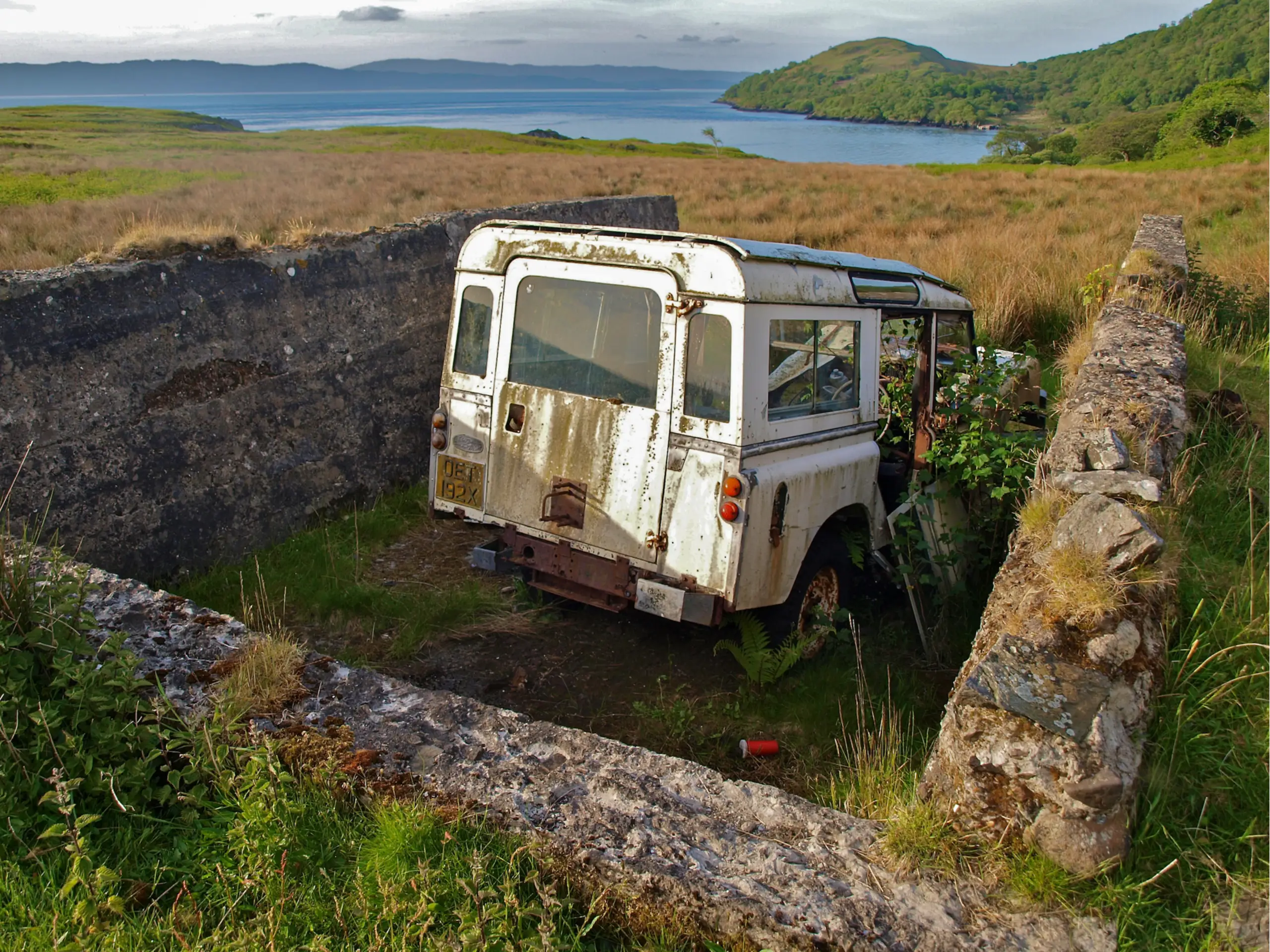
The most northern anchorage on the northeast coast of Jura, and the very last house too. It must take the owners well over an hour to drive down to Craighouse, in part over an unmetalled road. The most obvious thing to do here is to walk to the north tip of Jura and inspect the Gulf of Corryvreckan before having a go at it by boat (on old charts it was quaintly referred to as the "cauldron of the speckled sea", the English translation from the Gaelic).
Murdoch McKenzie's description in 1776 still stands today: "Coryvrechan is a violent breaking sea, and whirlpool, formed between the islands of Jura and Scarba, which will wash over any ship's deck, and be apt to sink her, if the hatches are open". But he also realised that if you get your timing right "the sea in this Sound is as smooth as in other neighbouring parts" (Nautical Descriptions of the West Coast of Great Britain from Bristol Channel to Cape-Wrath. Murdoch McKenzie, London, 1776). Maybe it has a much fiercer reputation than it really deserves, Cowper reckoned the Swellies in the Menai Strait were far more dangerous, although he didn't actually go through the gulf himself (Sailing Tours: The Yachtsman's Guide to the Cruising Waters of the English and Adjacent Coasts, Part V, The West Coasts of Scotland, the Orkneys, and the west coast of the North Sea. Frank Cowper, Upcott Gill, London, 1896). Even earlier, Dr John MacCulloch made a good point in one of his 1824 letters to Sir Walter Scott: "The hazards of the Coryvrechan, are of the same nature as those of the other narrow channels of the Western Islands, as well as of the Pentland Firth; and if greater, they may still be avoided, with similar precautions. But as this passage is seldom used by boats, and never by vessels, it has received, in addition to the exaggeration, the further ill character which attends all untried danger. Had it been as necessary a channel as the Kyle Rich or Hoy Mouth, we should have heard far less of its horrors. Like those of the Mahlstrom, they shrink before the boldness of a fair examination" (The Highlands and Western Islands of Scotland, Containing Descriptions of their Scenery and Antiquities. John MacCulloch, Longman et al, 1824).
Of course the best time to look at (and listen to) the Corryvreckan is in a storm, with the flood tide against a swell from the west, while the easiest time to sail through is when it is calm and slack water (keeping to the south side). Not surprisingly the Corryvreckan has featured in at least one book and one film, probably many more. It was here that Jules Verne set the final scene of his novel, 'The Green Ray' (The Green Ray. Jules Verne, Luath Press, Edinburgh, 2009), here too was the great drama in the film 'I know where I am going'. And also here is where George Orwell so nearly drowned. If he had, there would have been no 'Nineteen Eighty Four'. He, with friends and family, was in an open boat trying to get back to Barnhill from Glengarrisdale. He misjudged the tide, the outboard engine fell off, and under oars they were lucky to land up on Eilean Mor at the southwestern entrance to the gulf from where they were rescued by a passing fisherman. Even now accidents still happen, and as recently as 2023 a young kayaker was drowned in the gulf.
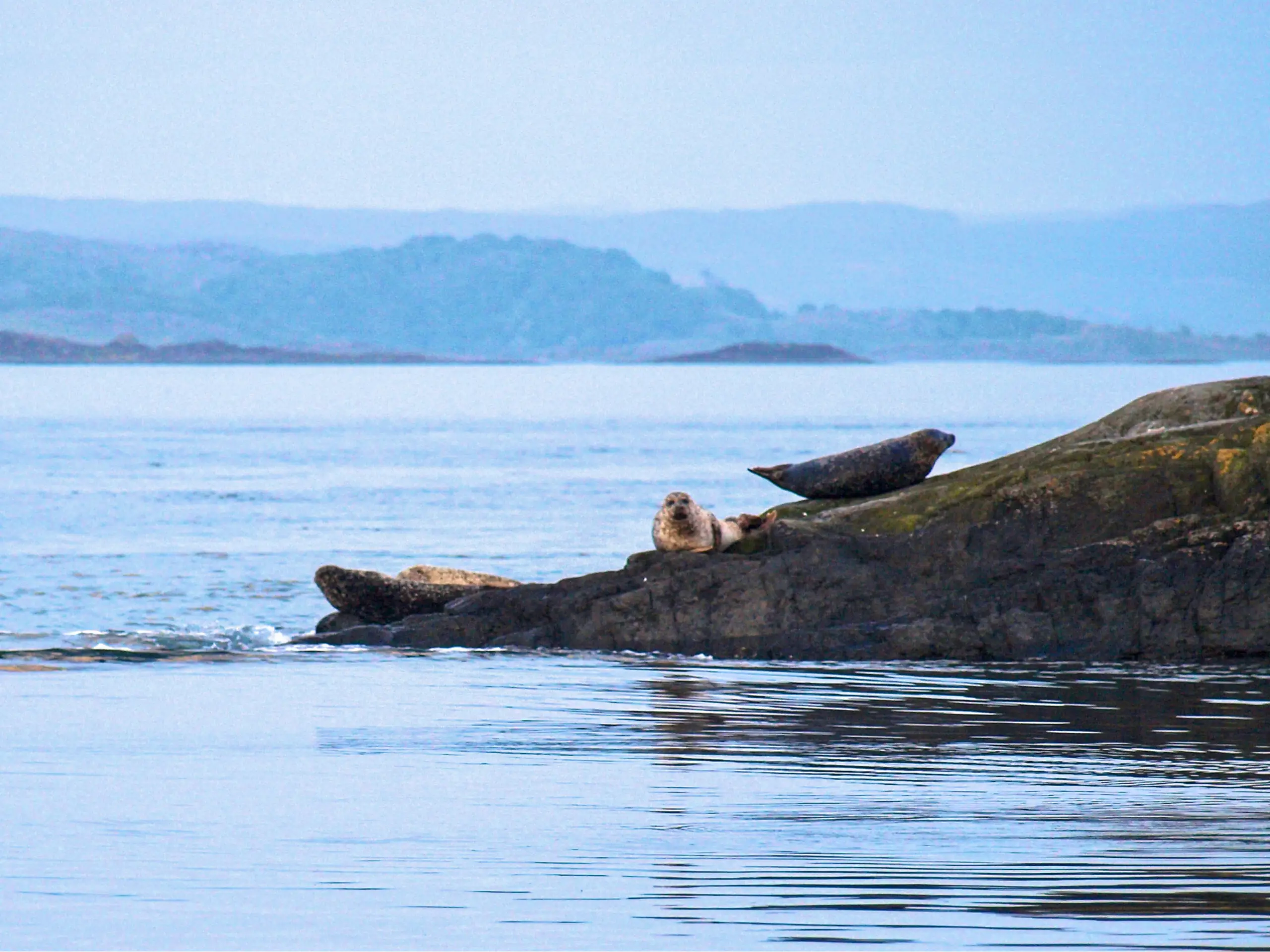
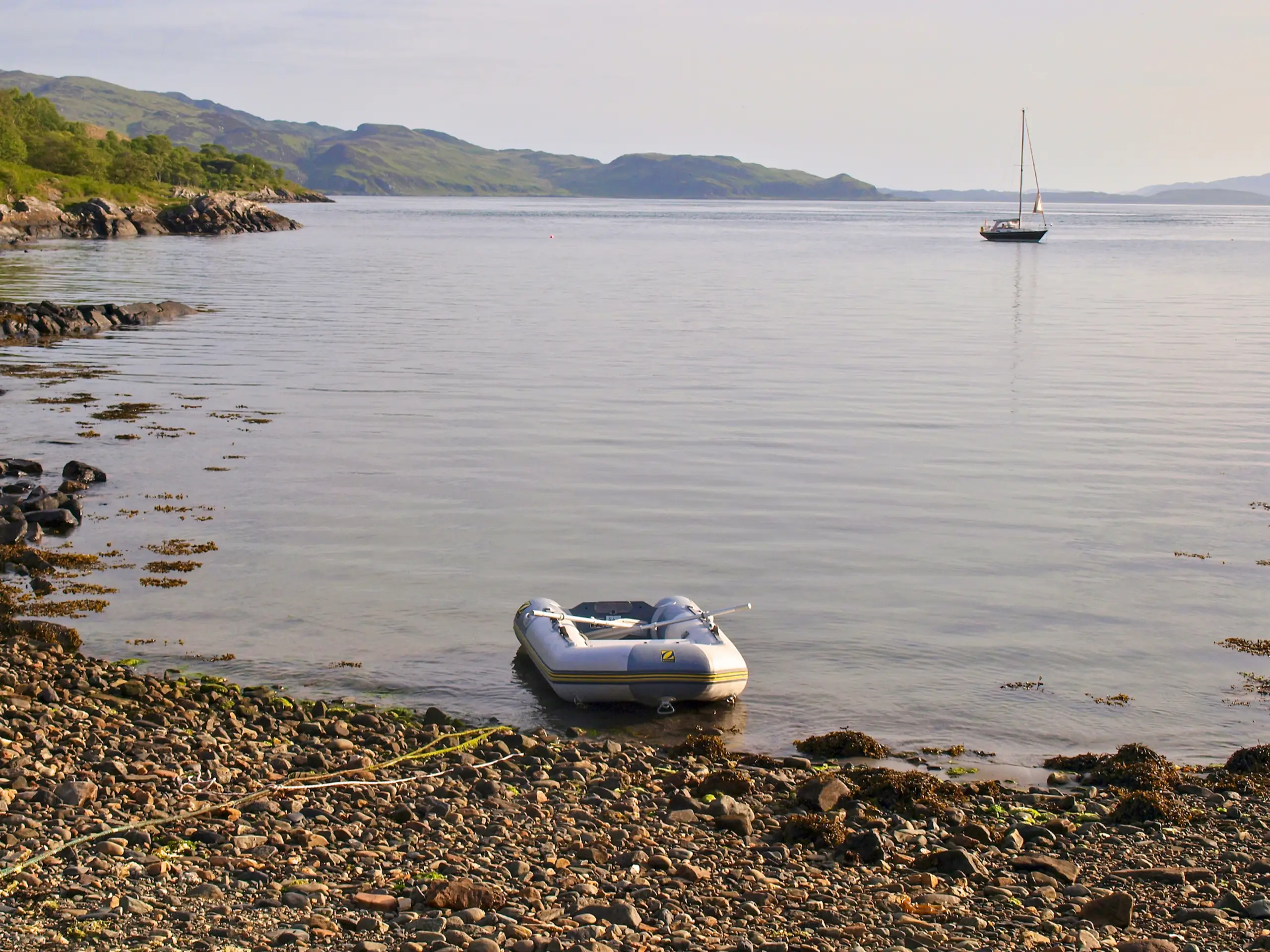
On the walk you will see deer and rabbits. Around the anchorage there is loads of bird song and in the anchorage there are loads of seals. It seems quite safe notwithstanding the rather unnerving sound of the tide racing by less than 100 metres away. Not a place to drag an anchor, or let the children loose in the dinghy. And you can walk down to Barnhill, rather further than from the Kinuachdrachd anchorage.